
Several Markets Tighten Affordability and Deposit-Limit Rules



The way online casinos check what you can afford is changing fast, and the change is happening in more than one country at once. Across a string of regulated markets, watchdogs are rolling out affordability checks, income-based deposit caps and mandatory limits that would have looked radical only a few years ago. The shared aim is simple: to keep gambling within what a person can genuinely afford to lose.
For most players the day-to-day experience will barely change, because the checks are built to run quietly in the background. For a smaller group of higher spenders, and for the operators serving them, the new rules are a significant shift in how accounts are monitored and how much can be deposited. Understanding the direction of travel helps you know what to expect the next time you sign up or top up.
This article sets out what is actually changing, where it is happening, how affordability checks work in practice, and what the rules mean for everyday players. It is a plain-English explainer of a complex and fast-moving area, not legal advice, and it aims to be fair to both the protective goals of the rules and the concerns critics raise about them.
The story in brief
- Two levers are tightening: affordability checks and deposit limits, often at the same time.
- It is happening in many markets, from the UK and Ireland to the Netherlands and the Nordic markets.
- Most players see little, as checks are designed to be frictionless for the safe majority.
- Deposit limits are going mandatory, sometimes across every licensed site a person uses.
- There is a real debate about privacy, friction and the risk of pushing players to illegal sites.
What is actually changing
Two connected ideas sit at the heart of the shift. The first is the affordability check, sometimes called a financial risk check or vulnerability check, which asks whether a customer's gambling is in line with what they can afford. The second is the deposit limit, a cap on how much money you can pay into your account over a set period. Regulators are strengthening both, and increasingly using them together.
What is new is not the existence of these tools but their reach and force. Affordability checks are moving from occasional, manual reviews to systematic, data-driven ones. Deposit limits are moving from a voluntary setting you could choose to ignore, to defaults and hard caps that apply whether you set them or not. In the strongest examples, a limit follows the player across every licensed operator rather than resetting at each new site.
Where the rules are tightening
The clearest way to see the trend is to look across markets. No two systems are identical, but the direction is unmistakable, and a change in one country tends to influence the debate in the next.
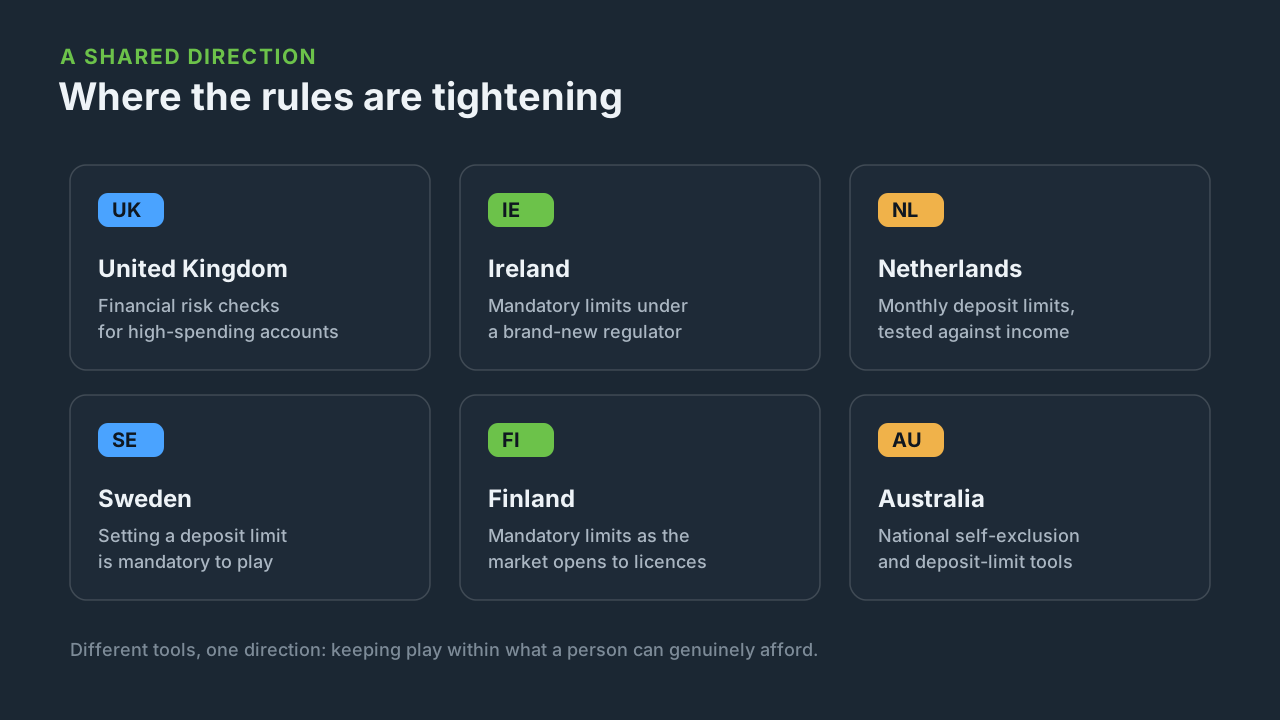
Britain has introduced financial vulnerability checks based on public data and is piloting frictionless financial risk assessments for the highest spenders. The Netherlands sets monthly deposit limits tested against a player's income. Sweden makes setting a deposit limit mandatory and expects operators to show a clear duty of care. Finland is opening its long-standing monopoly to licensed competition, with mandatory limits built in from the start, and Ireland has stood up a brand-new regulator with limit tools of its own. The table below summarises the picture.
| Market | Affordability approach | Deposit limits |
|---|---|---|
| United Kingdom | Light checks on public data, plus risk assessments for high spenders | Player-set, with checks escalating by spend |
| Ireland | New regulator with duty-of-care obligations | Mandatory limit tools, regulator can cap |
| Netherlands | Means test against recurring income to raise limits | Monthly caps tied to income and age |
| Sweden | Duty of care, with high limits under scrutiny | Players must set day, week and month limits |
| Finland | Checks built in as the market opens up | Mandatory limits, plus age-based loss caps |
| Australia | National self-exclusion and activity checks | Operator deposit-limit tools by period |
The details will keep moving, and exact figures change as rules are reviewed, so treat the table as a snapshot of direction rather than a permanent rulebook. For a fuller picture of how licensing and regulators shape a safe casino, our guide to casino licensing and safety explains what a licence actually guarantees.
What regulators mean by affordable
Affordability is easy to say and hard to define, and the way regulators draw the line matters a great deal. The emerging consensus is that it should be judged against a person's recurring, dependable income rather than their total wealth. The Netherlands has made this explicit, telling operators to base limits on structural income such as a salary and to exclude one-off sums like savings, gifts, bonuses or the value of a home.
The logic is that a windfall or a pot of savings can disappear quickly, and treating it as spendable income would defeat the point of the check. A limit built on steady monthly earnings is far more likely to reflect what someone can genuinely afford to lose. It also guards against a common tactic, where a player points to an asset they could in theory sell in order to justify a far higher limit than their everyday finances would support.
For players, the practical takeaway is that a higher limit will increasingly need to be backed by evidence of regular income, not a claim about net worth. That is stricter than the old approach, but it is also more honest about what affordability really means, and it is one of the clearest signs of how seriously regulators now treat the word.
How affordability checks actually work
The phrase affordability check makes many players picture an intrusive demand for bank statements before every session. In practice, the better systems are built as a ladder, where the depth of the check rises with the amount someone spends or loses. The vast majority of players never climb beyond the first rung.
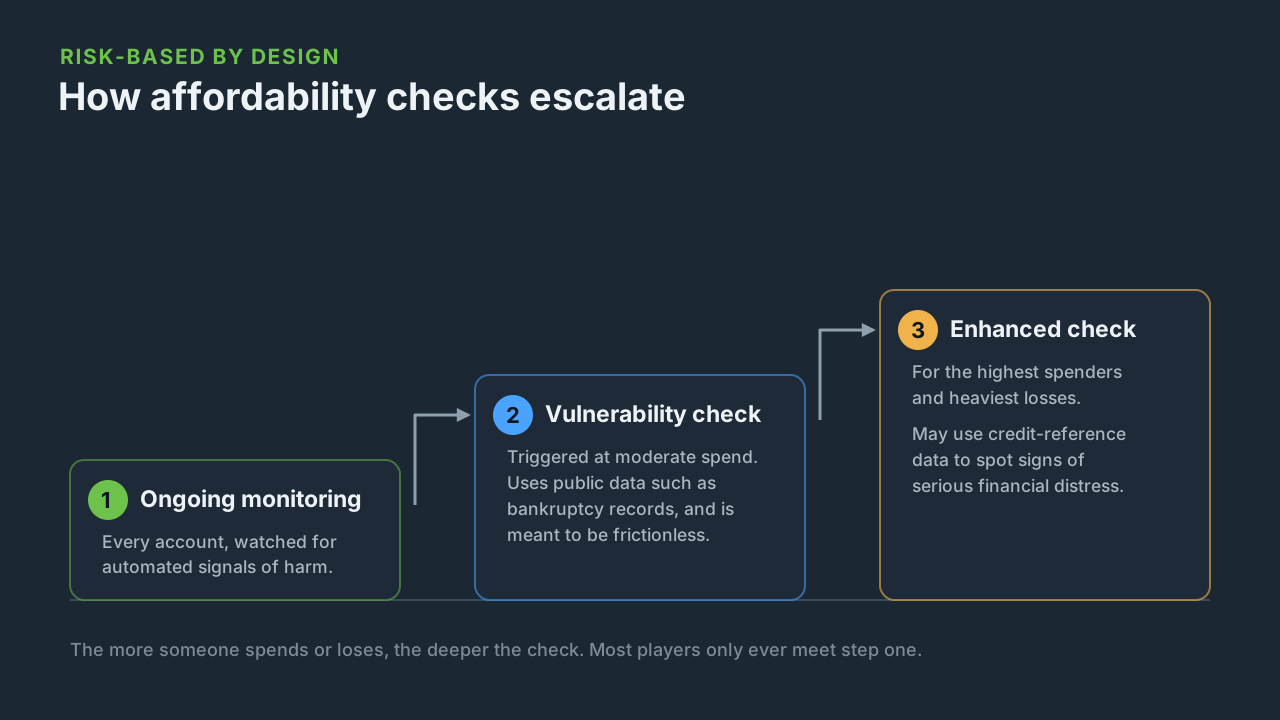
Ongoing monitoring for everyone
At the base of the ladder, every licensed operator is expected to watch accounts for signs of harm. This is not a financial check so much as a behavioural one, looking for patterns such as rapid deposits, chasing losses late at night, or a sudden jump in spending. It happens automatically and invisibly, and for most people it never leads anywhere because nothing about their play raises a flag.
Light financial checks at moderate spend
When spending passes a certain point, a light financial check can kick in. The important detail is that these checks typically use publicly available data, such as records of county court judgments or bankruptcy, rather than a deep dive into someone's bank account. Regulators have stressed that these checks are meant to be frictionless, completed in the background without asking the player to upload anything, and that they do not affect a person's credit score.
Enhanced assessments for the highest spenders
Only at the top of the ladder, for the small share of customers with the highest spending or the heaviest losses, do enhanced assessments come into play. These can draw on credit-reference data to identify signs of serious financial distress, such as someone gambling far beyond their means. The aim is to catch the cases where real harm is most likely, and in the UK the target is for the overwhelming majority of all checks to remain automatic, with only a tiny fraction of accounts ever needing to provide extra information.
Deposit limits: from optional to mandatory
If affordability checks are about watching, deposit limits are about capping. For years a deposit limit was a voluntary tool: a responsible option you could set if you wanted, and ignore if you did not. The shift now under way is turning that option into a rule, and in the strongest cases a rule that follows you everywhere.
The Nordic markets offer the clearest examples. In Sweden and Denmark, setting a deposit limit is not optional at all: a player has to choose their daily, weekly and monthly limits before they can play, so protection is switched on by default rather than left to chance. Both also run national self-exclusion registers, checked in real time whenever someone logs in or deposits, that apply across every licensed operator at once. The Netherlands takes a different route, tying its monthly limits to a player's recurring income so the cap reflects what someone actually earns rather than a flat figure.
Ireland shows how new entrants are building these ideas in from the start. Its recently established regulator requires every licensed operator to offer deposit-limit tools, with increases subject to a cooling-off period and decreases taking effect immediately, and it holds the power to cap deposits directly. Finland is doing something similar as it opens its long-protected market to licensed competition, writing mandatory deposit limits and age-based loss caps into the new regime from day one. The common thread is that the limit is becoming a floor of protection rather than an optional extra, and often one the player cannot quietly switch off.
Why the rules are tightening now
Several currents have converged to push this change, and no single one explains it alone. Together they have moved affordability from a niche compliance topic to a central plank of gambling policy.
Mounting evidence of harm
A steady flow of research and case studies has documented how quickly online gambling losses can spiral, especially for a minority of players who account for a large share of industry revenue. That concentration has made regulators wary of a model where the heaviest losses come from those least able to sustain them, and affordability checks are a direct response.
Public and political pressure
Gambling harm has become a mainstream political issue, with campaigners, health bodies and the press keeping it in view. Governments have responded with reviews, white papers and new laws, and few politicians want to be seen as soft on an industry associated with addiction. That pressure translates into tougher rules and regulators willing to enforce them.
Markets learning from each other
Regulators talk to one another, and a measure that works in one country is quickly studied elsewhere. Mandatory limit-setting, income-based caps and frictionless checks all spread partly by example. When one market shows that a tool is workable, the argument for adopting it next door becomes harder to resist.
Better data makes it possible
Finally, the technology has caught up. Faster data-sharing, open-banking style tools and improved analytics make it feasible to run checks in seconds that once took days of manual review. That is what allows regulators to promise frictionless checks for the majority, and it is a big reason the rules are arriving now rather than a decade ago. To understand the account and identity checks that already sit behind every signup, our explainer on how online casinos work is a useful companion.
What it means for players
For the everyday player, the honest answer is that little will change on a typical day. The checks are designed to be invisible unless your spending is high or your pattern of play looks risky, and setting a sensible deposit limit has always been good practice. Where you will notice the change is at the edges: raising a limit may now require a short wait or a light check, and very high spending may prompt a request for information.
It helps to separate what changes for most people from what changes for heavier spenders, because the two experiences are quite different.
| Situation | Typical player | High spender |
|---|---|---|
| Daily play | No visible change | Closer monitoring in the background |
| Raising a limit | Short cooling-off period | May need an affordability check |
| Data requested | Rarely, if ever | Possible for the highest losses |
| Overall effect | A gentle safety net | Real limits on how much can be lost |
None of this removes your own responsibility or your own tools. The single most effective step remains setting a deposit or loss limit you are comfortable with, and our guide to responsible gambling and staying in control walks through how to use them well.
The debate: protection versus displacement
These rules are not without controversy, and it is worth laying out both sides fairly. Supporters argue that the measures catch harm earlier, keep losses within what people can afford, and create a consistent duty of care that does not depend on a single operator's goodwill. Critics counter that checks add friction for the safe majority, raise questions about the privacy of financial data, and risk pushing determined players toward unlicensed sites that offer no protection at all.
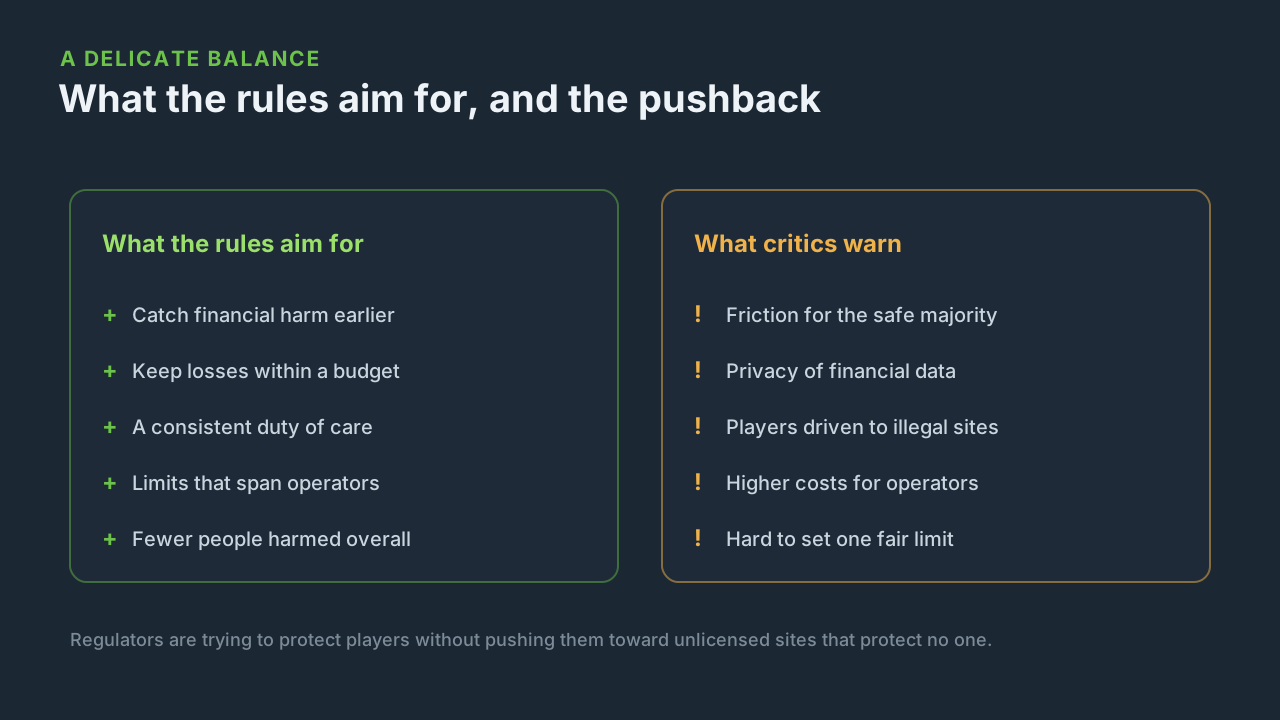
The displacement worry is the most serious, and the evidence is genuinely mixed. In some markets, the share of play taking place at licensed sites has slipped as rules tightened, which supporters attribute to other factors and critics blame on friction. The truthful position is that regulators are walking a tightrope, trying to reduce harm among the vulnerable without driving ordinary players into a black market where no limits, checks or protections apply. How well they balance that will define whether the current wave of rules is judged a success.
What players can do now
Whatever the rules in your market, the smartest response is to stay ahead of them rather than wait to be checked. A few habits keep you in control and make any check that does come along painless.
Set a deposit or loss limit the moment you open an account, at a level you would be comfortable losing, and treat it as a firm ceiling rather than a target. Keep a rough sense of what you spend, since your own record is the best reality check of all. Stick to licensed operators, because the same rules that add a little friction are what guarantee your money is protected and your complaints are heard. And if a term in the small print is unfamiliar, our casino glossary explains the language regulators and operators use.
A note on your data and your rights
If you are asked for information as part of a check, licensed operators must handle it under strict data-protection rules and use it only to assess risk. You are always free to decline and stop playing instead. Be wary of any site that promises to skip checks or limits entirely, because that is a sign it may be unlicensed, where none of these protections apply. This article is general information, not legal or financial advice.
What comes next
The direction is set, but the details are still being written. Expect more markets to link limits and self-exclusion across operators, since protection that resets at each new site is easy to sidestep. Expect affordability thresholds to be refined as regulators gather data on what level of checking actually reduces harm without driving players away. And expect a continued push on the surrounding rules, from advertising restrictions to bonus limits, as governments treat affordability as one part of a wider safer-gambling package.
The open question is calibration. Set the checks too loosely and they fail the people they are meant to protect; set them too tightly and they annoy the majority and risk pushing play offshore. The coming period will be about finding that balance, and the markets that get it right will likely become the template others follow, just as today's leaders already are.
The bottom line
Affordability checks and deposit limits are becoming a standard feature of regulated online gambling rather than a novelty in one or two countries. The tools differ, from income-based caps to frictionless data checks, but the goal is consistent: to keep play within what people can genuinely afford and to catch financial harm before it deepens.
For the great majority of players, the practical impact is small and the protection is real. For heavier spenders, the limits are more tangible and, for some, genuinely helpful. The sensible approach for everyone is the same one that has always served players best: choose licensed sites, set your own limits, keep track of what you spend, and treat gambling as entertainment you can afford rather than a way to make money.
Frequently asked questions
What are affordability checks?
Affordability checks are steps a licensed casino takes to make sure a customer can afford their gambling. Light checks use public information such as bankruptcy records, while a small number of very high spenders may face a deeper assessment that can draw on financial data.
What is a deposit limit?
A deposit limit caps how much you can pay into your account over a day, week or month. In markets such as Sweden and Denmark you must set one before you can play at all, while others encourage limits or set sensible defaults you can adjust within the rules.
Will affordability checks affect me?
For most players, no. Regulators design the checks to be largely frictionless, so the great majority of accounts are cleared automatically in the background. Only higher spenders and heavier losses trigger a deeper look.
Which countries are tightening the rules?
Among others, the UK, Ireland, the Netherlands, Sweden, Finland and Denmark have all moved to strengthen affordability checks, deposit limits or both, and Australia continues to expand its player-protection tools.
Are affordability checks the same as a credit check?
Not usually. The routine checks rely on public data and do not affect your credit score. Only the enhanced assessments for the highest spenders may use credit-reference data, and regulators describe these as soft checks that do not harm your rating.
Can I still set my own deposit limit?
Yes. Every licensed casino must let you set your own deposit and loss limits, and it is one of the most effective tools for staying in control. In some markets you set your limit within a regulated cap rather than freely.
Why are regulators bringing in these rules?
Growing evidence of gambling-related harm, public and political pressure, and better data-sharing that makes checks practical have all pushed regulators to act. The goal is to catch financial harm earlier and keep play within what people can afford.
Go deeper

Responsible gambling and staying in control
How to set deposit and loss limits, take breaks, and use self-exclusion when you need it.
Read guide →
Casino licensing and safety
What a licence actually guarantees, and why it matters more than any bonus.
Read guide →
Operators lean into AI personalisation
The same data that powers safer-gambling checks is reshaping what you see in the lobby.
Read article →Editorial note
This article is independent journalism about gambling regulation. It summarises fast-changing rules in plain English and is not legal, financial or compliance advice. Specific thresholds, limits and requirements vary by market and are reviewed regularly, so always check the current rules with your national regulator or a licensed operator. If you choose to play, do so only at licensed casinos and within limits you set in advance.