
New Self-Exclusion Tools Roll Out Across Regulated Markets



Taking a break from gambling has never been easier to do, or harder to undo, and that is exactly how it is meant to be. Across regulated markets, the tools that let a person step away, from national self-exclusion registers to bank card blocks, are being upgraded, joined up and rolled out to more players than ever.
The idea behind self-exclusion is simple: give people a reliable way to lock themselves out of gambling when they decide they need to, and make that lock strong enough to hold. What is changing in 2026 is how far the lock reaches and how quickly it works. New registers are launching, existing ones are gaining real-time checks, and complementary tools such as blocking software and banking controls are becoming mainstream.
This article explains how self-exclusion works, the layers of protection now available, the national registers across our markets, and how to use these tools well. It is written to be genuinely useful if you or someone you know is thinking about taking a break, and it is information rather than advice.
The story in brief
- Self-exclusion is getting stronger, with new registers and real-time checks rolling out.
- National registers block every licensed site in a market from a single sign-up.
- Layers stack up: operator tools, national registers, blocking software and bank blocks.
- It is easy to start and hard to undo, which is a deliberate safety feature.
- It works best with support, and free, confidential help is available everywhere.
What self-exclusion is
Self-exclusion is a formal request to be prevented from gambling for a chosen period. Unlike simply deciding to stop, it puts a technical barrier in the way: once you are excluded, operators must refuse to let you open an account, log in or place a bet until the period is over. It sits at the firm end of a family of control tools that ranges from gentle reminders to hard locks.
The crucial modern feature is that self-exclusion no longer has to be arranged operator by operator. A national register lets you exclude from every licensed gambling company in your market with one sign-up, closing the old loophole where a person could block one site and simply move to the next. That single change has made self-exclusion far more effective, and it is the foundation the newer tools build on.
How the control tools compare
Self-exclusion is the firmest option in a broader family of control tools, and it helps to see where it sits. Lighter tools suit a quick reset, while the firmer ones are built for a real break. The table lines them up.
| Tool | What it does | Typical length |
|---|---|---|
| Reality check | Reminds you how long and how much you have played | Pops up at set intervals |
| Time-out | A short, automatic cooling-off break | A day to six weeks |
| Deposit limit | Caps how much you can pay in | Ongoing until you change it |
| Self-exclusion | A firm block on your account | Six months to five years |
| National register | Blocks every licensed operator at once | Months up to permanent |
The lighter tools are reversible on the spot, which makes them perfect for everyday control but weaker when you need a firm barrier. Self-exclusion and the national registers are where the real commitment begins, and they are the focus of the changes rolling out now.
The layers of protection
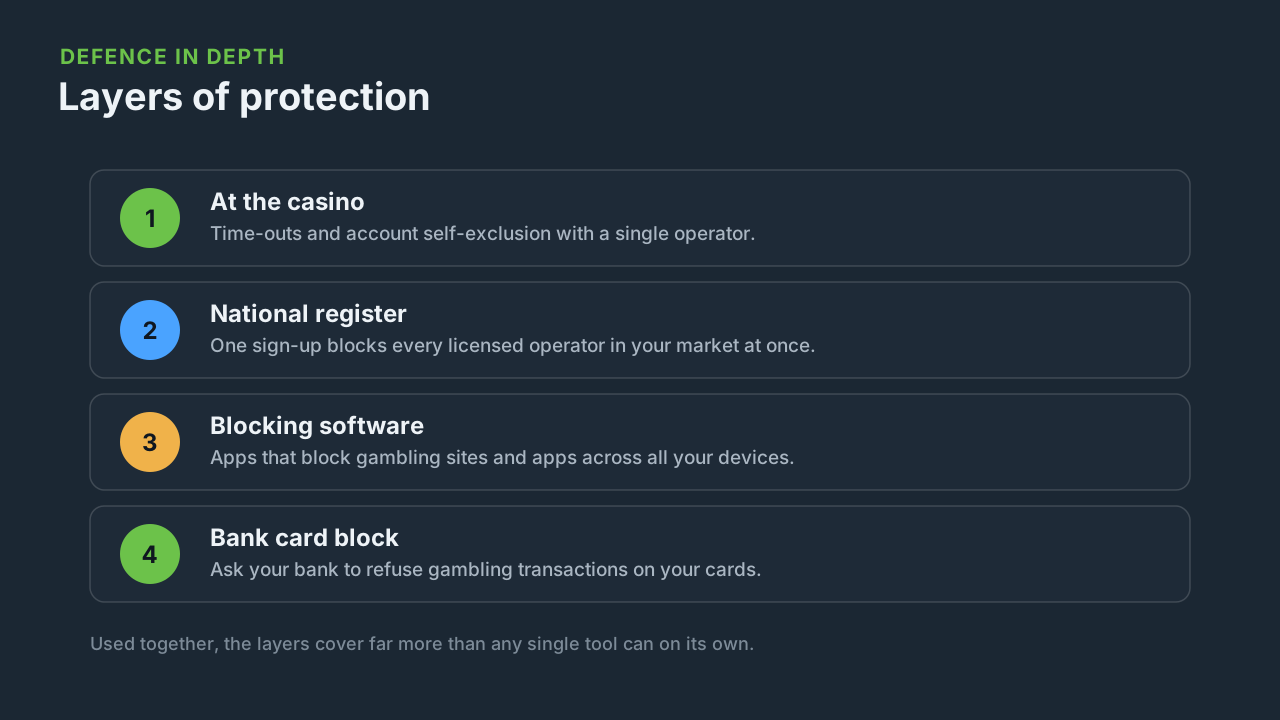
Rather than a single switch, self-exclusion is best understood as a set of layers that work together. Each covers a gap the others might miss, and using more than one gives the strongest protection.
At the casino
The first layer lives inside each casino account. Licensed operators must offer time-outs, a short cooling-off break, and account self-exclusion for longer periods. These are useful for a quick pause, but on their own they only cover the one site, which is why they are a starting point rather than the whole answer.
National registers
The second and most powerful layer is the national register. One sign-up blocks every operator licensed in your market at once, and operators are legally required to check the register and turn excluded players away. This is where most of the recent progress has happened, with registers adding real-time checks so the block applies the instant you try to log in or deposit.
Blocking software
The third layer moves onto your own devices. Blocking software prevents gambling sites and apps from loading on your phone and computer, which helps catch the unlicensed and offshore sites a national register cannot reach. It is a valuable complement precisely because it works at the device level rather than the operator level.
Bank card blocks
The final layer sits at the money itself. Many banks now let you switch on a gambling block that refuses card payments to gambling businesses, sometimes with a deliberate delay before it can be switched off again. Because it stops the transaction rather than the website, it adds a backstop that works no matter which site a person tries to use.
The national registers
The national register is the centrepiece of modern self-exclusion, and most of our markets now run one or are about to. The names differ, but the promise is the same: sign up once, and every licensed operator must lock you out.
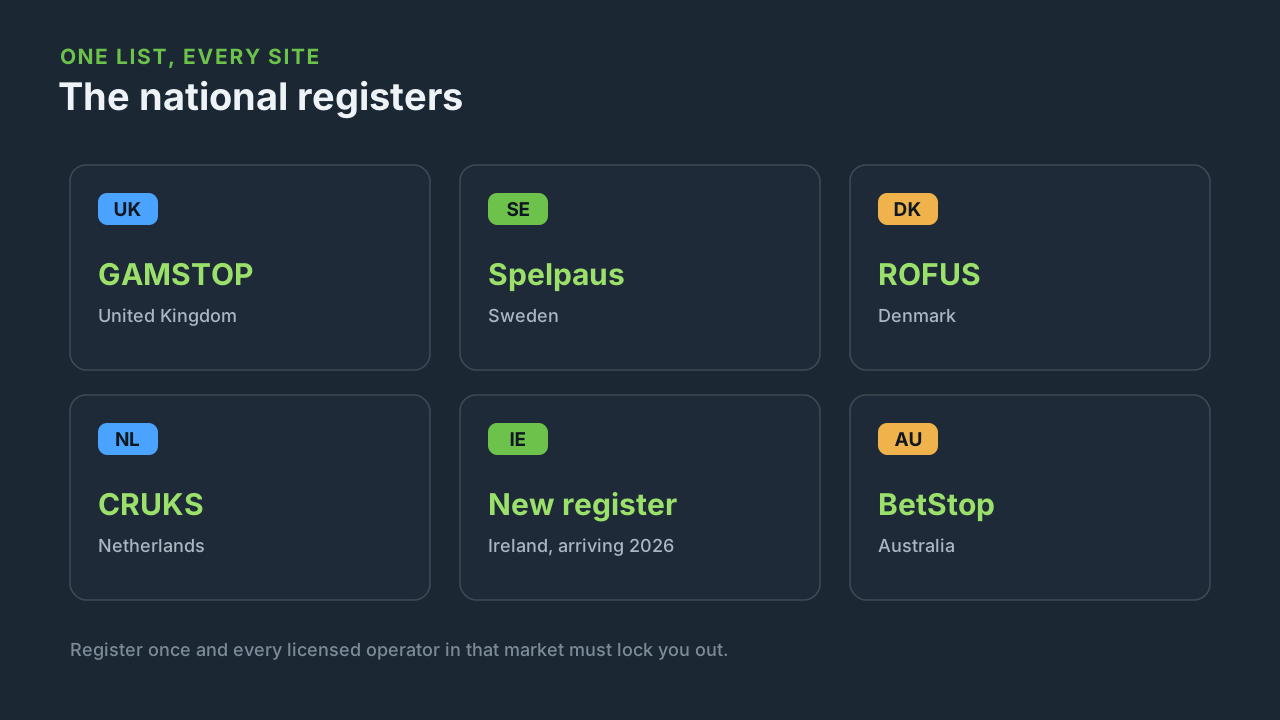
Britain's GAMSTOP is among the most established, and its recent changes show the direction of travel: it now offers a five-year exclusion that renews automatically, which has quickly become the most popular long-term option, and it has folded high-street betting-shop exclusion into the same scheme. The Nordic registers, Sweden's Spelpaus and Denmark's ROFUS, have added real-time checks so the block bites the instant you try to log in. The Netherlands runs CRUKS, and Ireland is standing up a brand-new national register under its new regulator. The table sets out the picture across our markets.
| Market | Register | Notes |
|---|---|---|
| United Kingdom | GAMSTOP | Six months to five years, with an auto-renewal option |
| Sweden | Spelpaus | One month up to indefinite, with real-time checks |
| Denmark | ROFUS | Temporary or permanent, checked in real time |
| Netherlands | CRUKS | Minimum of six months across all licensed sites |
| Ireland | New register | Launching under the new regulator during 2026 |
| Australia | BetStop | Three months up to a lifetime, one sign-up |
Exact durations and details vary and are reviewed over time, so treat the table as a guide rather than a rulebook. Self-exclusion also sits within the wider set of control tools covered in our guide to responsible gambling and staying in control, which walks through limits, time-outs and where to find support.
Easy to pause, deliberate to return
One feature of self-exclusion surprises people, and it is worth understanding because it is a strength rather than a flaw: it is deliberately much easier to start than to stop. You can exclude yourself in minutes, for free, without giving a reason, and the block takes effect at once. Reversing it is another matter.
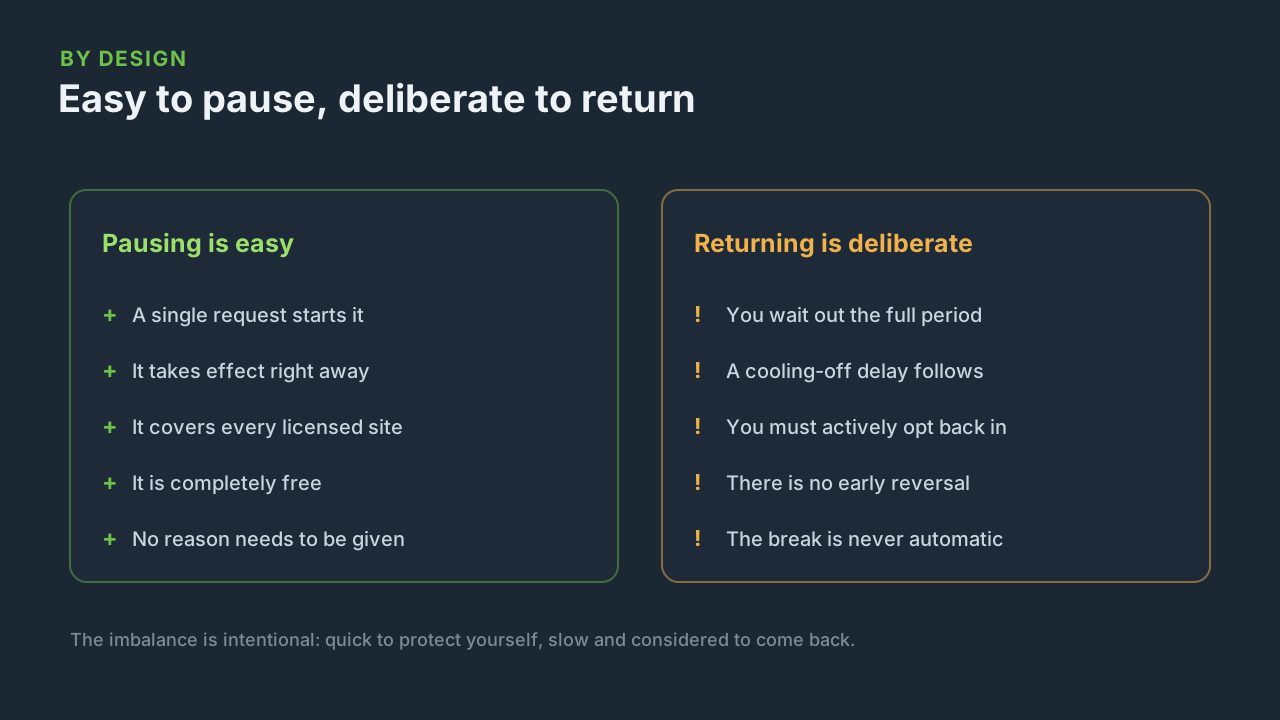
You cannot cut a self-exclusion short once it has started. When the period ends, coming back is not automatic either: there is usually a cooling-off delay of at least a day, and you have to take an active step to reactivate rather than simply being let back in. This built-in friction protects the decision you made in a clear-headed moment from a weaker one later, and it is one of the reasons self-exclusion works better than a private promise to stop.
A closer look at software and bank blocks
The two device-and-money layers are worth understanding in a little more detail, because they are the parts most people have not yet switched on. Blocking software installs on your phone, tablet and computer and quietly stops gambling sites and apps from opening, including the unlicensed ones a national register cannot touch. Some options are free and others charge a small fee, and the best of them cover every device you use rather than just one.
A bank block works differently, stopping gambling payments at the moment of the transaction. A growing number of banks and app-based accounts now offer it as a simple toggle, and many add a deliberate delay, often a day or two, before it can be switched off again, mirroring the friction built into self-exclusion itself. Used together, the two close much of the gap between what a register covers and where a determined moment might otherwise lead.
What happens after you self-exclude
Knowing what to expect removes a lot of the hesitation around taking the step. Once you self-exclude, your gambling accounts with the affected operators are closed to play, and you will not be able to log in, deposit or bet until the period ends. Marketing must stop too: licensed operators are required to remove you from promotional emails, texts and push notifications, so the constant nudges disappear rather than following you through a difficult time.
Importantly, self-exclusion does not trap any money you already hold. You remain entitled to withdraw the balance in your account, and a good operator will help you cash out even as it closes access to play. The exclusion is recorded so that it can be enforced across the market, but it is treated as sensitive information and used only for that purpose. When the period finally ends, nothing reopens automatically; the account stays shut until you take the deliberate steps to return, which is the safeguard working exactly as intended.
Why the tools are improving
Several forces are pushing self-exclusion forward at once. The clearest is regulation: watchdogs increasingly treat a working national register as a basic requirement of a licensed market, and newer regimes such as Ireland's build one in from the start. Where a register already exists, regulators are demanding that it work faster and leak less, which is why real-time checks at login and deposit are becoming standard.
Technology is the enabler. The same digital identity and instant data checks that speed up sign-up also let a register confirm in a fraction of a second whether someone is excluded, closing the delay that once let a determined person slip through. Rising demand matters too: registrations have climbed, including a sharp increase among younger adults, which has pushed providers to make the tools easier to find and use. Finally, self-exclusion is increasingly joined up with the wider safer-gambling agenda, sitting alongside the deposit caps and checks we cover in our report on affordability and deposit-limit rules.
What it means for players
For anyone who wants a break, the practical news is good: the tools are stronger, faster and easier to reach than they were even a year or two ago. Excluding through a national register now genuinely means every licensed door in your market is closed at once, and adding blocking software and a bank block can extend that protection to sites and payments a register alone would miss.
It also means self-exclusion is becoming a normal, low-friction thing to do rather than a last resort buried in account settings. Treating a time-out or a short exclusion as routine maintenance, the way you might take a break from any habit, is exactly the mindset regulators are trying to encourage. Choosing a licensed operator matters here too, because only licensed sites are bound by these registers, a point our guide to casino licensing and safety explains in full.
The limits of self-exclusion
Honesty about what these tools cannot do is as important as praising what they can. The biggest gap is that a national register only covers operators licensed in your market. It cannot block unlicensed or offshore sites, which continue to operate outside the rules, and critics rightly warn that a register presented as total protection can create a false sense of security if those gaps are ignored.
This is exactly why the layered approach matters. Blocking software helps catch the offshore sites a register misses, and a bank block stops the payment even when a site does not recognise the exclusion. No single tool is complete, but together they cover far more ground, and none of them replaces support for the underlying reasons someone may be gambling more than they want to.
Choosing the right length
One of the few decisions you make when self-excluding is how long it should last, and it is worth a moment's thought. The instinct is often to pick the shortest option, but because you cannot cut a period short, a length that felt slightly too long at the start is usually safer than one that ends before you are ready.
A short time-out suits a brief reset after a bad session, while a self-exclusion of six months or more is better when you want a genuine break from the habit. Britain's popular five-year, auto-renewing option exists precisely for people who want the decision to hold without having to revisit it. Whatever you choose, remember that you can always extend or re-exclude later, so erring on the longer side costs you nothing and protects the choice you are making now.
How to take a break
If you are thinking about stepping away, the process is quick and the tools are designed to help rather than judge. A sensible order makes the break as effective as possible.
Start with the national register for your market, since that single sign-up closes every licensed operator at once and is the strongest single step. Add blocking software to your phone and computer to cover unlicensed sites, and switch on your bank's gambling block so payments are refused at source. Choose a length that feels right rather than the shortest option, because you can always come back later but cannot cut a period short. If any of the terms are unfamiliar, our casino glossary explains them plainly.
You do not have to do it alone
Self-exclusion is most effective when it is paired with support. If gambling has stopped feeling fun or is causing you worry, that is a good reason to reach out, and free, confidential help is available in every market we cover. Talking to someone you trust, or to a specialist support service, alongside setting a block gives you the best chance of a break that lasts. This article is general information and not medical, financial or legal advice.
What comes next
Expect registers to keep getting faster and better connected. Real-time checking will become universal rather than a recent upgrade, and more schemes will link online and land-based gambling into a single exclusion, as Britain has begun to do. Look too for closer ties between self-exclusion and banking, so a person can switch on protection across their casino accounts and their card in fewer steps.
The harder frontier is the unlicensed market, and the coming years will test whether device-level blocking and payment controls can meaningfully reduce the leakage that registers cannot reach. The direction, though, is clear: self-exclusion is moving from a scattered set of options toward a joined-up safety net that is quick to switch on and genuinely hard to slip past.
The bottom line
Self-exclusion has quietly become one of the most effective tools in safer gambling, and it is getting stronger. National registers close every licensed door with a single sign-up, real-time checks make the block instant, and blocking software and bank controls extend it further still. The deliberate difficulty of undoing it is a feature, not a bug, protecting a clear-headed decision from a weaker moment later.
No tool is perfect, and the gap around unlicensed sites is real, which is why the layered approach and genuine support both matter. But for anyone who wants to take a break, the practical message is encouraging: the tools are free, fast and more reliable than ever, and using them is a sign of strength rather than defeat.
Frequently asked questions
What is self-exclusion?
Self-exclusion is a tool that lets you block yourself from gambling for a set period. You can exclude from a single operator, and a national register blocks every licensed operator in your market at the same time.
How is self-exclusion different from a time-out?
A time-out is a short cooling-off break, often a day to six weeks, after which your account reopens automatically. Self-exclusion is a longer, firmer commitment, typically six months to five years, that does not lift by itself.
Does self-exclusion block all gambling sites?
A national register blocks every operator licensed in your market, but it cannot block unlicensed or offshore sites. Pairing it with blocking software and a bank gambling block closes many of the remaining gaps.
Can I cancel my self-exclusion early?
No. By design you cannot reverse self-exclusion before the period ends, and coming back usually involves a cooling-off delay and an active step to reactivate. That deliberate friction is the whole point.
What are GAMSTOP, Spelpaus and BetStop?
They are national self-exclusion registers, in the UK, Sweden and Australia. One sign-up blocks you from all licensed operators in that market. Other markets run their own, such as ROFUS in Denmark and CRUKS in the Netherlands.
Does self-exclusion cost anything?
No. Self-exclusion and the national registers are free, and most bank gambling blocks are too. Some third-party blocking software is free, while other versions charge a small fee for extra features.
What if I still feel the urge to gamble?
Self-exclusion works best alongside support. Free, confidential help is available in every market, and pairing a block with talking to someone you trust or a support service gives you the best chance of a lasting break.
Go deeper
Responsible gambling and staying in control
Limits, time-outs, self-exclusion and where to find free, confidential support.
Read guide →
Markets tighten affordability and deposit limits
The companion trend: checks on what you can afford and caps on how much you deposit.
Read article →
Casino licensing and safety
Why only licensed sites are bound by these registers, and how to check one.
Read guide →Editorial note
This article is independent journalism about gambling regulation and safer-gambling tools. It explains fast-changing self-exclusion schemes in plain English and is not medical, financial or legal advice. Scheme names, durations and details vary by market and are reviewed regularly, so always check the current position with your national regulator or register. If gambling is causing you harm, free and confidential support is available in every market we cover.