
Payment Rails: Instant Withdrawals Become the Baseline



Not long ago, a same-day casino withdrawal was a selling point. In 2026 it is closer to an expectation, and the operators that still make players wait three to five days for their own money are starting to look like stragglers. Instant, or near-instant, payouts have quietly crossed the line from premium perk to baseline feature, and the shift says as much about the plumbing of modern payments as it does about gambling.
The change did not happen because casinos suddenly became generous. It happened because the rails underneath them got faster, regulators pushed banks toward real-time transfers, and a generation of players raised on instant everything simply stopped tolerating the wait. Put those together and slow payouts became a competitive liability that few operators can now afford.
This piece looks at what is actually driving the trend, which methods lead the pack, and the one thing that still decides how quickly you get paid, which, spoiler, is rarely the payment network itself. It is reporting for players who want to understand the shift rather than marketing copy about it.
The story in brief
- Instant is the new default. Fast payouts have moved from a perk to an expectation across competitive markets.
- The rails changed. Real-time bank systems, open banking, push-to-card and crypto all settle in seconds now.
- Regulation helped. Rules such as the EU's Instant Payments Regulation pushed banks to offer instant transfers as standard.
- The wait is the review, not the rail. Verification and manual checks are what still slow a payout down.
- It is good for players, including for staying in control, since faster, locked-in payouts remove the temptation to reverse them.
From perk to expectation
For most of online gambling's history, withdrawals were slow by default. Winnings sat in a pending queue, then crawled through card networks or bank transfers that themselves took days, especially over weekends. Operators that could pay within 24 hours advertised it proudly, because it was genuinely unusual. That world is fading fast.
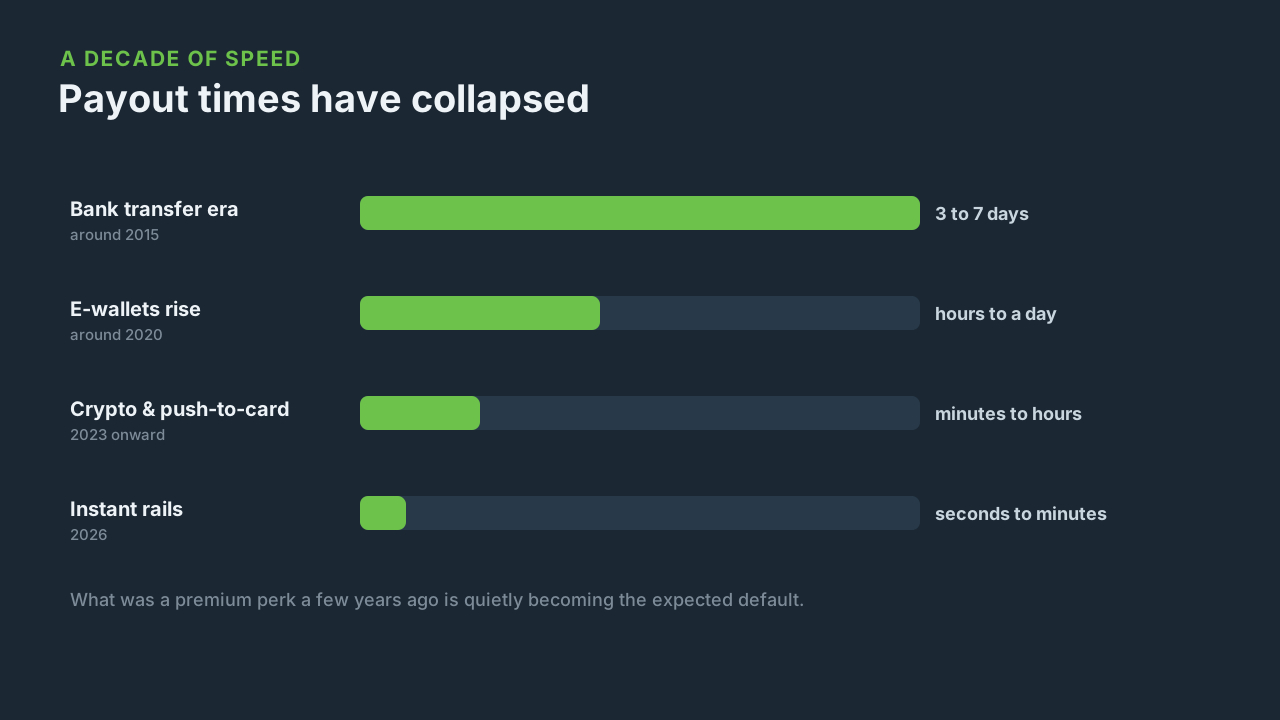
The direction of travel is unmistakable. E-wallets pulled the average down to hours, crypto and push-to-card shaved it to minutes, and the newest bank rails settle in seconds. Once a meaningful share of operators offered near-instant cashouts, the rest faced a simple choice: match it or watch players drift to sites that did. In competitive markets, matching it is winning.
Player behaviour has reinforced the shift. Reviews, forums and comparison sites now treat slow payouts as a serious mark against an operator, and word travels fast. In a market where switching casinos takes minutes, a reputation for dragging out withdrawals is one of the quickest ways to lose players for good.
Why now: the plumbing changed
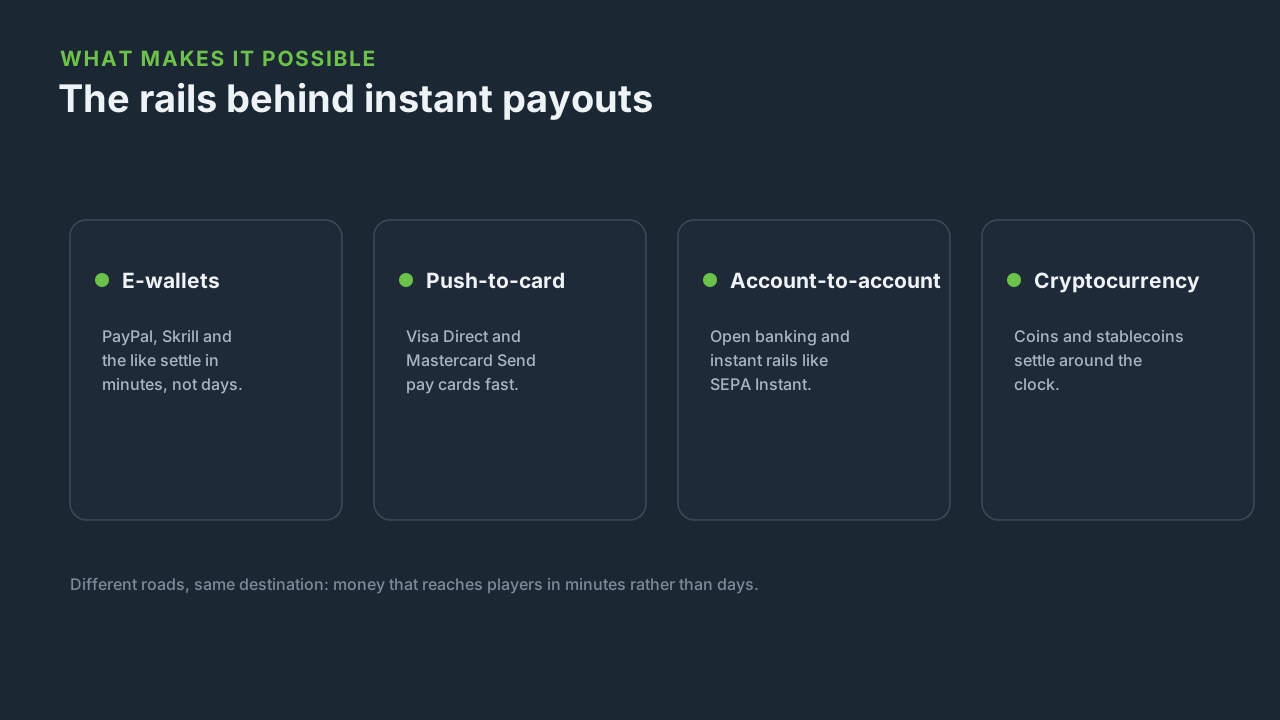
The single biggest reason 2026 feels different is that the underlying payment infrastructure finally caught up. For years the bottleneck was the banking system itself, which ran on business-hours batch processing. That has been replaced, market by market, with rails that move money instantly, at any hour, every day of the year.
Real-time bank rails and regulation
Regulation has been a quiet accelerant. In the European Union, the Instant Payments Regulation now requires banks to send and receive euro transfers that settle within ten seconds, around the clock, and it bars them from charging more for instant transfers than for standard ones. The United Kingdom has run near-instant Faster Payments for years, and in the United States the FedNow service and the RTP network have brought real-time transfers into the mainstream. When instant bank transfers become normal for everyday life, players expect nothing less from a casino.
Push-to-card
Card payouts used to be the slow part, relying on refund mechanisms that took days. Push-to-card services such as Visa Direct and Mastercard Send changed that by sending money to a debit card in close to real time, so a method most players already have can now deliver fast withdrawals without any new account.
Open banking and pay-by-bank
Open banking lets a casino connect directly to a player's bank account, with consent, to verify and move funds. It cuts out card intermediaries, reduces failed payments and supports instant account-to-account transfers where the rails allow. For operators it is cheaper; for players it is faster and often smoother.
Crypto and stablecoins
Cryptocurrency was arguably the original instant-payout method, settling in minutes regardless of banking hours. Stablecoins, pegged to traditional currencies, have made this more practical by removing much of the price volatility, and at licensed crypto-friendly casinos they now offer some of the quickest cashouts available.
| Rail | Where | What it enables |
|---|---|---|
| SEPA Instant | Eurozone | Ten-second euro transfers, around the clock |
| Faster Payments | United Kingdom | Near-instant sterling transfers |
| FedNow and RTP | United States | Real-time domestic transfers |
| Visa Direct, Mastercard Send | Global | Push payments straight to a debit card |
| Open banking | UK, EU and beyond | Direct account-to-account transfers |
| Crypto and stablecoins | Global | Settlement at any hour, every day |
Which methods actually pay fastest
Not every method has moved at the same pace, and the gap between the quickest and the slowest is now stark. Digital-first options lead comfortably, while anything routed through legacy banking or card-refund systems lags behind. The table below is a snapshot of where things stand and which way each method is heading.
| Method | Typical payout, once verified | Direction of travel |
|---|---|---|
| E-wallet | Minutes to a few hours | Established leader |
| Cryptocurrency | Minutes | Established leader |
| Push-to-card | Minutes to hours | Rising fast |
| Instant bank / open banking | Minutes to hours where supported | Rising fast |
| Standard bank transfer | 1 to 3 working days | Declining |
| Legacy card refund | 1 to 3 working days | Declining |
The practical lesson for players has not changed: if speed matters, choose an e-wallet, a fast coin, or an instant-transfer option where your casino offers it, and keep the slower rails for occasions when speed is not the priority. Our payments guide breaks down each method in more depth.
One nuance is worth noting: the method you deposit with often dictates the method you can withdraw to, at least up to the amount you paid in. If fast cashouts matter to you, choose your deposit method with the exit in mind, not just the entry.
The real bottleneck is not the rail
Here is the part the marketing tends to skip. Even with the fastest rail in the world, a payout is only as quick as the review that sits in front of it. When a casino advertises instant withdrawals, the instant part refers to the transfer once it is approved, not to the approval itself. That approval is where the variation, and the frustration, still lives.
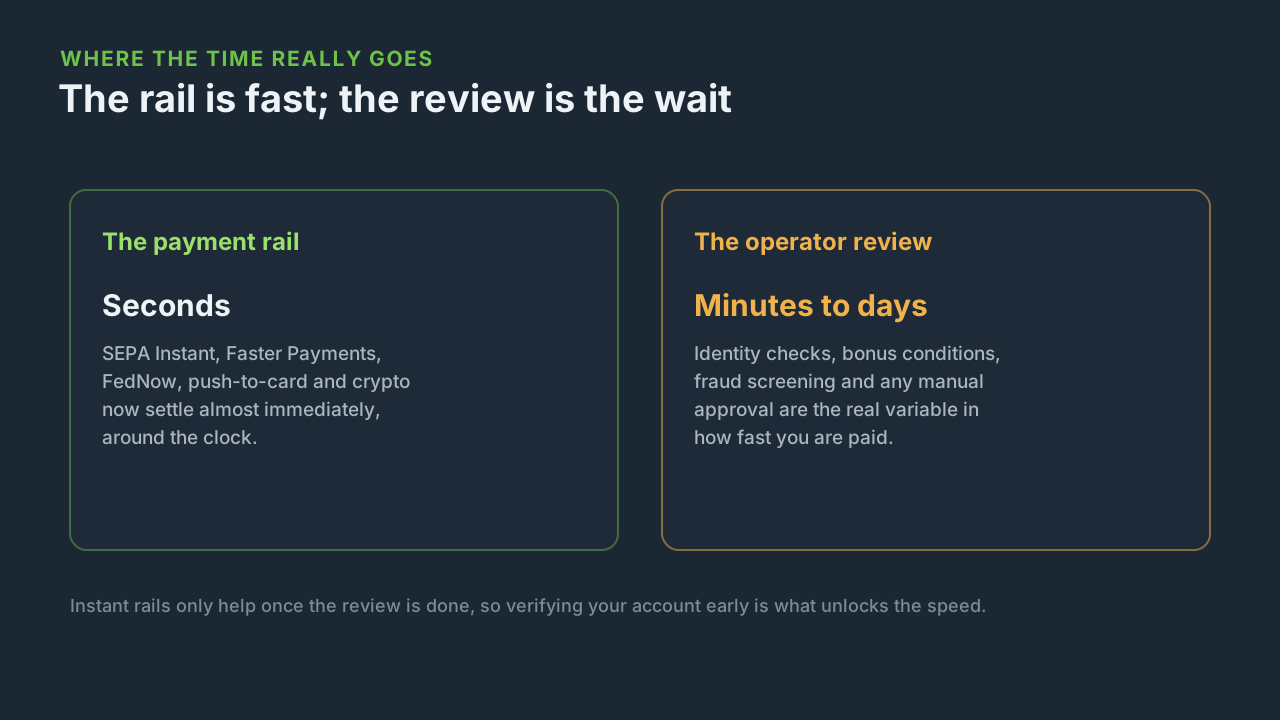
Three things drive that review time. The first is identity verification, the know-your-customer checks a licensed casino must complete before releasing funds. The second is bonus conditions, since winnings tied to an unmet wagering requirement cannot be paid out. The third is fraud and anti-money-laundering screening, which flags unusual activity for a closer look. The best operators automate the routine cases and keep humans for the genuine exceptions, which is why their payouts feel instant while others do not.
The single most useful thing a player can do is remove that friction in advance. Completing verification when you register, rather than at the moment you cash out, is what turns an "instant" payout from a marketing claim into reality. It is the same advice our payments guide has always given, and instant rails make it matter more, not less.
How operators are adapting
Behind the scenes, the shift is reshaping how casinos run their cashiers. Automated verification and risk scoring now clear the majority of withdrawals without a human ever touching them, reserving manual review for the minority that genuinely need it. Some operators publish payout-time targets and even display a countdown, turning speed into a visible promise rather than a hidden variable.
One quieter change is especially welcome. The old "reverse withdrawal" feature, which let players pull a pending payout back into their balance and gamble it again, thrives on delay. As payouts speed up and lock in, that window shrinks or disappears, which happens to be better for players trying to hold on to their winnings. It is a rare case where the commercial incentive and the player's interest point the same way.
The competitive pressure has pushed transparency, too. More cashiers now show a clear status for each withdrawal, from pending to processed, so players can see where their money is rather than guessing. That visibility, borrowed from parcel tracking, is quickly becoming an expectation of its own.
What instant does not mean
It is worth being clear about the limits of the trend, because "instant" is a word marketing teams love to stretch. Instant payouts do not mean verification is skipped; a licensed casino must still confirm who you are, and doing that late is the most common reason a supposedly instant cashout stalls. They do not remove withdrawal limits or the caps some sites apply per day, week or month, so a very large win may still be paid in stages regardless of the rail.
Nor do instant rails change the rule that winnings tied to an unmet bonus cannot be withdrawn, or the anti-fraud checks that occasionally pause an unusual request. And they rarely let you cash out to a method you did not deposit with, since returning funds to source is a standard anti-money-laundering safeguard. In short, faster does not mean fewer rules; it means less waiting once the rules are satisfied.
Fees, limits and the fine print
Speed and cost are separate questions. At reputable casinos withdrawals are usually free, and in the eurozone an instant euro transfer cannot be charged more than a standard one. But your own bank or e-wallet may still take a cut, crypto carries a network fee, and currency conversion can quietly erode a payout if you play in a currency other than your account's. Instant is not automatically free.
Limits are the other piece of small print. Minimum and maximum withdrawal amounts still apply, and monthly caps at standard accounts can mean a large win arrives over several weeks even on the quickest rail. None of this undermines the trend, but it is a reminder to read a casino's payments page rather than trusting the word instant on a banner.
It is not the same everywhere
Instant payouts are arriving unevenly, because payment infrastructure and rules differ by market. The eurozone has a clear tailwind now that instant euro transfers are mandated and cannot be surcharged. The UK has enjoyed fast bank payments for years, so the expectation is well established there. In the United States, real-time rails exist through FedNow and RTP but there is no mandate forcing their use, so adoption is patchier and card-based methods remain common.
Elsewhere, players often lean on the rails that work best locally: e-wallets and cards in many regions, and crypto in markets where banking options are limited or slow. The upshot is that a casino operating across several countries may offer genuinely instant payouts in one market and next-day transfers in another, through no fault of its own. It is worth checking what is actually available for your country rather than assuming a global promise applies to you.
Currency and local banking habits matter as well. In some markets a domestic instant scheme is the fastest route, while in others an e-wallet or card still rules simply because that is what people use day to day. A sensible operator meets players where they are, offering the quickest local option rather than a single global default.
The responsible-gambling upside
Faster payouts are usually framed as a convenience, but there is a player-protection angle that deserves more credit. The reverse-withdrawal trap, where a pending payout sits for days and tempts a player to cancel it and keep playing, has long been a quiet driver of harm. Instant, locked-in payouts close that window: once the money is sent, the decision to keep it is made for you.
Speed is not a substitute for the safeguards that matter most, though. Deposit and loss limits, reality checks and self-exclusion do the heavy lifting, and they work no matter how fast a casino pays. If anything, quicker access to winnings makes a clear personal budget more important, not less. Our guide to responsible gambling and staying in control covers those tools and where to find free support in every market we cover.
There is a behavioural subtlety here too. Getting winnings quickly can reinforce the healthy habit of banking a win and walking away, whereas a long pending period keeps the money psychologically in play. Speed, used well, supports the very discipline that limits are meant to protect.
What it means for players
For players, the trend is mostly good news, provided expectations are set correctly. Treat "instant" as "instant once verified and approved," and do the one thing that unlocks it: complete your identity checks up front. Favour a fast method, keep an eye on whether a casino advertises realistic payout times rather than vague promises, and remember that a slow payout at an otherwise licensed site usually points to review or verification, not a scam.
Speed is also a useful signal when choosing where to play. An operator that pays quickly and predictably is showing operational competence and confidence, and it tends to correlate with good conduct elsewhere. If quick cashouts are a priority for you, our roundup of fast-payout casinos is built around exactly that, though the licence and the limits you set for yourself still matter more than raw speed.
It also pays to keep your account details current. An expired card, an out-of-date address or a name mismatch between your account and your payment method can turn an instant payout into a days-long back-and-forth, entirely avoidably.
What comes next
The frontier from here is consistency rather than raw pace. As instant rails spread, the differentiator shifts from "how fast is the transfer" to "how fast is the approval," which puts the spotlight squarely on verification and automated risk decisions. Expect more casinos to compete on guaranteed payout windows, more use of open banking to verify and pay in a single step, and stablecoins carving out a bigger role where traditional rails lag.
There will be a ceiling, and it is a healthy one. Anti-money-laundering and safer-gambling obligations mean some checks cannot and should not be skipped for the sake of speed. The likely endpoint is not zero-friction withdrawals for everyone, but near-instant payouts for verified, low-risk players, with sensible pauses reserved for the cases that genuinely warrant them.
For players, that is arguably the ideal outcome: money that lands in seconds when everything checks out, and a short, clearly explained pause only when something genuinely needs a closer look.
The bottom line
Instant withdrawals becoming the baseline is one of the more clearly positive shifts online gambling has seen in years. Better rails and firmer rules have dragged the whole industry toward paying players their money quickly, and the operators clinging to multi-day timelines are running out of excuses. The smart move for players is unchanged and simple: pick a licensed casino, verify early, choose a fast method, and set your own limits. Do that, and instant really can mean instant.
Frequently asked questions
Are instant casino withdrawals really instant?
What is the fastest way to withdraw from a casino?
Why do some casinos still take days to pay?
What is making instant payouts the norm in 2026?
Do instant withdrawals cost more?
Is a reverse withdrawal a good thing?
Are instant payouts safe?
Go deeper
Payments & payouts
Every deposit and withdrawal method compared, with realistic timelines.
Read guide →
AI-driven personalisation
The other big operator trend of 2026, and what it means for players.
Read article →
Responsible gambling
Why faster payouts help, and the limits that matter more than speed.
Read guide →