
Game Studios Consolidate as Content Libraries Grow



Open a casino lobby in 2026 and you are spoiled for choice, with thousands of slots and live tables a click away. Look closer at who actually makes them, though, and the picture narrows fast. A wave of mergers and acquisitions has pulled much of the industry's creative talent under a small number of large groups, so the logos in the lobby increasingly trace back to the same handful of owners.
It is an odd, almost contradictory moment. By one measure the market has never been richer, with more games released each month than any player could try. By another it has never been more concentrated, as independent studios are bought up and folded into sprawling content groups. Both things are true at once, and understanding why is the key to reading where the games you play come from.
This piece looks at what is driving the consolidation, who the big players are, why the number of games keeps climbing anyway, and what all of it means for players and the casinos that serve them. It is context rather than hype, aimed at helping you see the machinery behind the lobby.
The story in brief
- Ownership is concentrating. A few large groups now own many of the studios behind popular games.
- Yet libraries keep growing. Total output rises even as independent owners shrink in number.
- Cost and scale are the drivers, from rising taxes and compliance to the relentless demand for new titles.
- Aggregators concentrate distribution, adding a second layer of consolidation between studios and casinos.
- For players it is mixed: more content and reliability, but less diversity, with fairness and licensing unchanged.
The consolidation paradox
The headline tension is simple to state and strange to sit with. The pool of independent game makers is shrinking as the biggest companies acquire their rivals, and yet the total number of games available to players is going up, not down. A lobby that offered a few hundred titles a decade ago now routinely lists several thousand.
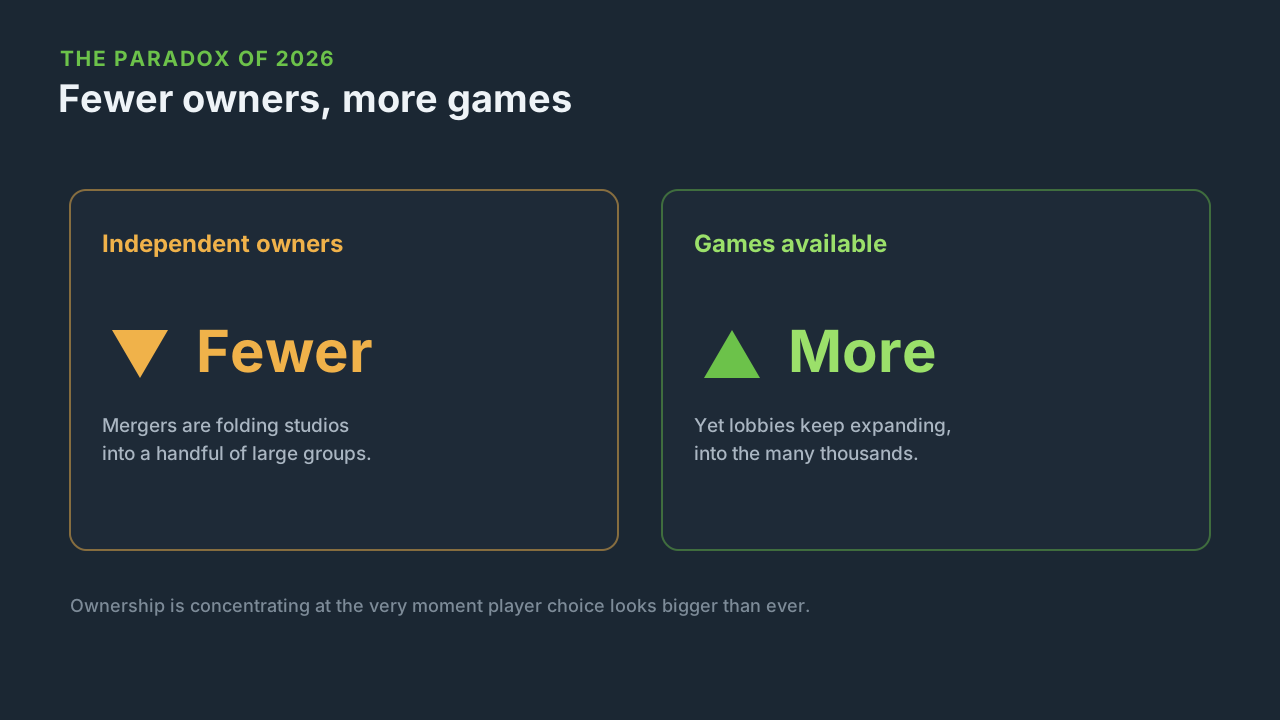
The resolution to the paradox is that consolidation does not stop games being made; it changes who owns the studios making them. Acquired brands keep their names and keep shipping titles, new independents still spring up hoping to be noticed or bought, and volume itself has become a competitive weapon. The result is a market where choice and concentration rise together.
Why studios are merging now
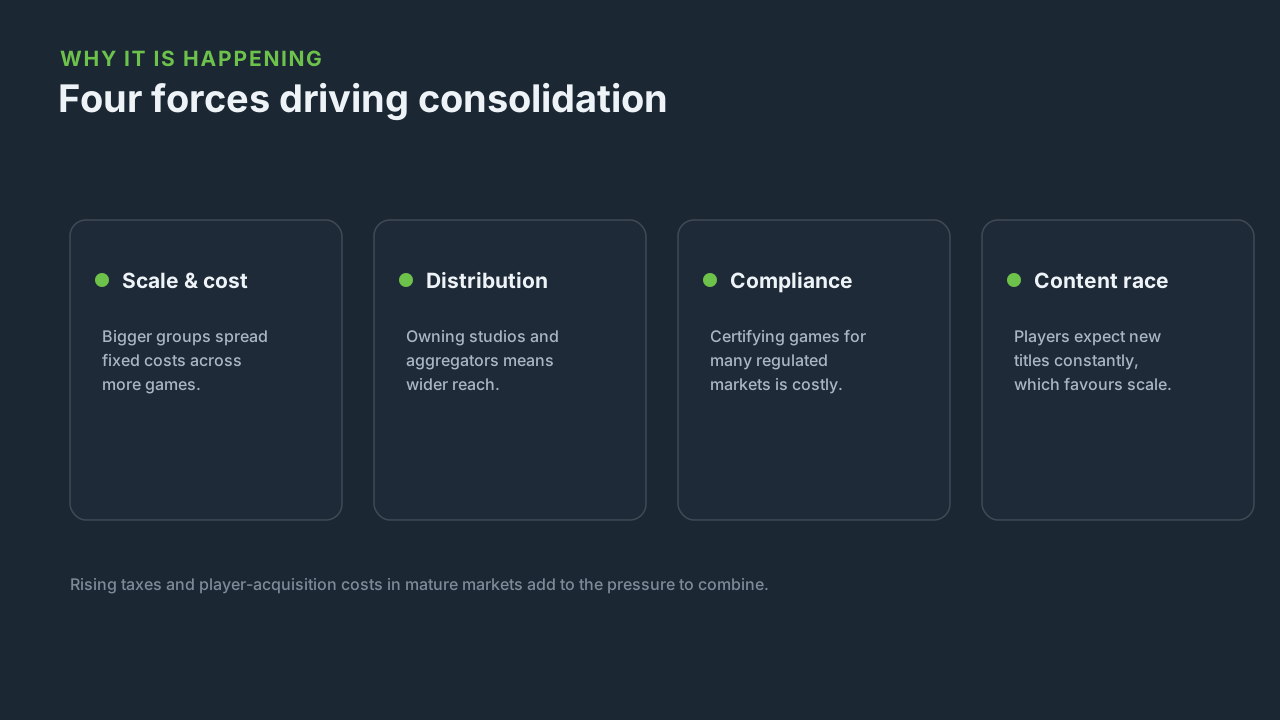
Consolidation is not new to online gambling, but it has accelerated, and the reasons are as much about economics as ambition. Four forces, in particular, are pushing smaller studios toward the shelter of a larger group.
Rising costs in regulated markets
As more countries regulate online gambling, the cost of doing business has climbed. Each market brings its own licence, testing and reporting requirements, and getting a single game certified across many jurisdictions is expensive and slow. Rising gambling taxes in mature markets squeeze margins further. For a small studio those fixed costs are punishing; spread across a large group's catalogue, they become manageable.
The value of scale
Scale buys resilience. A big group can absorb a flop, fund riskier creative bets, invest in shared technology, and negotiate harder with casinos and aggregators. It can also cross-sell, pairing slots with live-casino content and back-end services so a single relationship covers much more. For studios facing a content arms race, joining that kind of machine is often more attractive than fighting it alone.
Distribution and the aggregator layer
Getting a game in front of players is its own battle, and it runs through aggregators, the platforms that bundle many studios into one integration a casino can plug in once. Owning or partnering closely with distribution is enormously valuable, which is why groups have bought aggregators as well as studios. That adds a second layer of consolidation between the game and the lobby.
A quick history of how we got here
Consolidation did not arrive overnight. In the early years of online play, the market was a scattering of independent studios, each striking one-off deals with individual casinos. Distribution was slow and fragmented, and a good game could easily be missed simply because it never reached the right lobbies.
The first big shift was the rise of aggregators, which solved that distribution problem by bundling many studios into a single feed. That made life easier for everyone, but it also created powerful gatekeepers, and owning one became a strategic prize. The second shift was regulation. As country after country introduced formal licensing, the cost of compliance climbed, and the studios best placed to absorb it were the largest.
The third and most visible shift has been the buying spree of the past few years, as listed groups used their size and access to capital to acquire respected studios outright. Live casino, in particular, saw rapid concentration, because running professional studios around the clock is expensive and rewards scale. Put those three waves together and today's landscape starts to look less like a sudden takeover and more like the natural endpoint of a maturing market.
Who owns whom
Follow a single game from studio to screen and you pass through several hands, each of which has been a target for consolidation. Understanding that chain makes the ownership map far easier to read than a list of brand names.
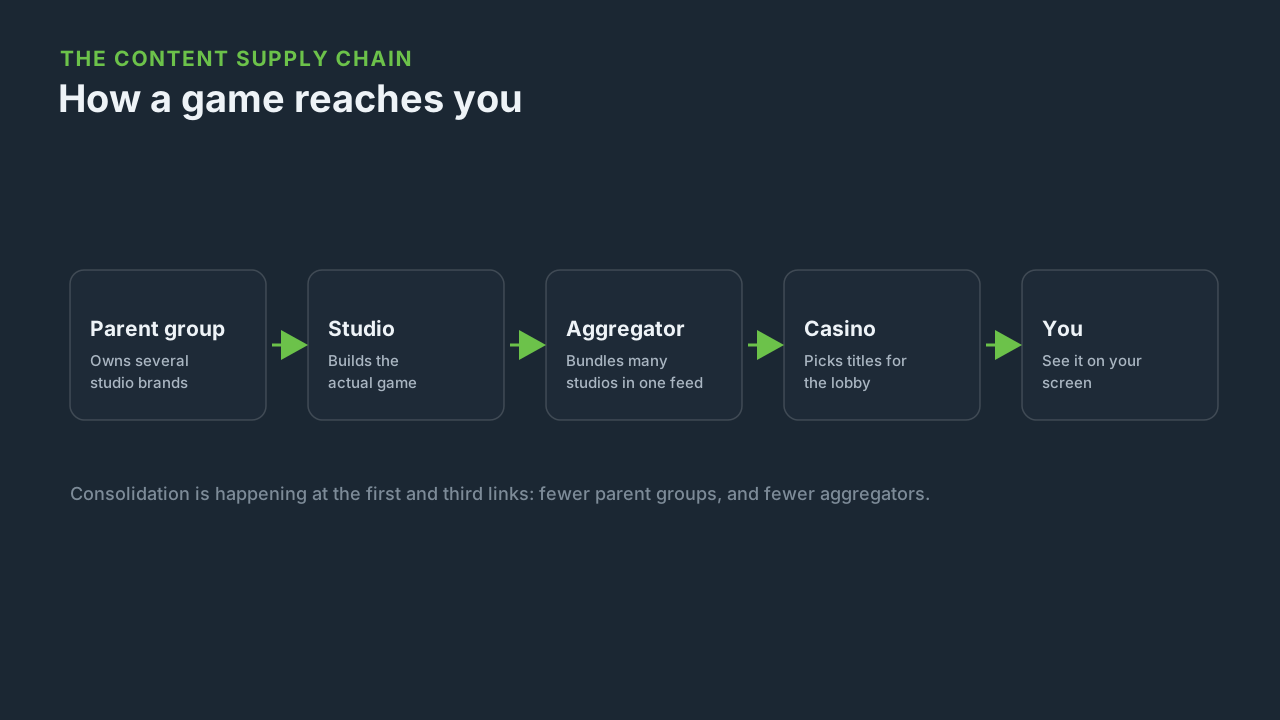
At the top sit the large groups that have grown by acquisition, gathering well-known studios under one roof while letting each keep its brand and creative identity. Below them, aggregators bundle many studios into a single technical connection, so a casino integrates once and receives hundreds of games. The operator you actually visit then curates that supply into the lobby you see. Consolidation has touched every link, not just the studios.
| Layer | What it does | How consolidation shows up |
|---|---|---|
| Content groups | Own multiple game studios and brands | Buy independent studios, keep the brand, share tech and compliance |
| Studios | Design and build the games | Sell to a group for scale, or stay independent and license out |
| Aggregators | Bundle many studios into one integration | Acquired by groups to control distribution to casinos |
| Operators | Run the casino and the lobby you see | Merge for scale, then curate supply from fewer, larger sources |
One name illustrates the trend better than any chart. A single live-casino and slots group now sits behind a string of formerly independent studios that many players still think of as separate brands, having acquired them over several years. The logos in your lobby stay familiar even as the ownership behind them narrows, which is exactly why the concentration is easy to miss.
Not everyone has sold. A handful of large independents remain fiercely competitive, releasing prolifically and licensing their content across thousands of sites without a parent group. Their success is part of the story too, because it shows that scale, not ownership structure alone, is what really drives the market. To see how those games reach you in the first place, our explainer on how online casinos work maps the full path from studio to screen.
Why the library keeps growing
If owners are consolidating, why does the games list keep getting longer? Because the incentives all point toward more output, not less. Volume has become a way to compete for attention, and the machinery of a large group is built to produce it.
Groups run several studios in parallel, each shipping its own roadmap, so the combined release schedule is enormous. Shared technology means a new title can be built on proven engines and mathematics rather than from scratch, cutting the time from idea to launch. Popular games spawn sequels and variants, a proven theme returning again and again with fresh features. And because casinos reward freshness in their lobbies, there is constant pressure to feed the pipeline.
The catch is that more is not the same as more varied. A larger library built from shared engines and familiar templates can feel repetitive, with dozens of titles that play alike beneath different art. Understanding the numbers behind those games, from hit frequency to variance, is where our guide to RTP and volatility helps you tell genuinely different games apart.
Where the squeeze is sharpest: live casino
Consolidation has touched every corner of the industry, but nowhere more visibly than live casino. Running a live-dealer operation is a different kind of business from building slots. It means real studios, trained dealers working in shifts around the clock, camera and streaming infrastructure, and the licensing to broadcast into each market. Those are heavy fixed costs, and they reward whoever can spread them across the largest audience.
That economics explains why live casino concentrated faster than any other segment. A single dominant group now supplies a large share of the roulette, blackjack and game-show tables you will find across the industry, having built or bought the studios that produce them. When you join a branded live table at one casino and see the very same table at another, you are usually looking at one supplier serving both sites at once.
For players, the upside is quality and consistency, since a well-funded operator can deliver slick production, stable streams and a deep menu of tables. The trade-off is familiarity. Because so much live content flows from the same source, the experience can feel similar wherever you play, and genuinely different live formats are rarer than the sheer number of tables might suggest.
What it means for players
For the person actually spinning a reel, consolidation is neither a disaster nor a windfall. It is a set of trade-offs, and being clear-eyed about them is more useful than cheering or panicking.
On the positive side, big groups tend to bring reliability. Games are tested, certified and maintained to a consistent standard, live-casino streams are professionally run, and titles are less likely to vanish overnight. Cross-market licensing also means a game you enjoy in one country is more likely to be available, and legally, in another.
The cost is diversity. When a few groups shape most of the output, the quirky, experimental design that small independents once championed can get squeezed out in favour of proven formulas. Pricing power shifts too, as fewer suppliers negotiate with fewer operators, which can influence the terms behind the scenes even if the player never sees them directly.
Crucially, consolidation does not change the two things players should care about most: whether a game is fair and whether the casino is licensed. A slot's certified return and random outcomes stay the same regardless of who owns the studio, and if a term looks unfamiliar, our casino glossary explains the language in plain English.
What it means for operators
Casinos feel consolidation from the other side of the table. Buying content from a few large groups is simpler, with one contract and one integration covering a huge slice of the lobby, and that convenience is real. But it also concentrates their dependence, leaving them with less leverage when a dominant supplier sets terms or pulls a popular title.
The same tension runs through the whole market, so it helps to lay the two perspectives side by side.
| Theme | For players | For operators |
|---|---|---|
| Choice | More titles, but many built on shared templates | Simpler sourcing from fewer, broader suppliers |
| Reliability | Consistent testing, uptime and support | Stable delivery, fewer integrations to maintain |
| Leverage | Little direct effect on the player | Less bargaining power against dominant groups |
| Innovation | Fewer experimental, off-beat releases | Reliance on proven formats over risky bets |
| Fairness | Unchanged: certified RTP and random results | Unchanged: licensing and testing duties remain |
Smart operators respond by keeping their supply base broad on purpose, backing a few independents alongside the big groups so their lobby does not look like everyone else's. For players, that curation is one of the quieter reasons a casino can feel distinctive even when so much of the industry's content flows from the same sources.
The risks of a concentrated market
Concentration is not automatically bad, but it does carry risks worth naming. When a handful of companies supply most of the games, a single outage, dispute or corporate decision can ripple across many casinos at once, and the diversity that protects a market from monoclimate thinking gets thinner.
Regulators have begun to watch these deals more closely for exactly that reason, weighing whether a merger concentrates too much control over a market. Pricing is another concern, since fewer suppliers can mean firmer terms over time. And there is a subtler creative risk: when the safest path to profit is another version of a proven hit, the incentive to try something genuinely new fades.
Worth keeping in perspective
Consolidation changes who makes the games and how the market is shaped, but it does not lower the protections that matter to you. Play only at licensed casinos, check that a game shows a certified return, and treat any site promising results that sound too good to be true with caution. Ownership behind the scenes is a business story; your safety still comes down to licensing and fair, tested games.
How to tell who really made a game
If all this makes you curious about the games in your own lobby, the good news is that the information is usually a click away. Most slots list their studio in the game's information panel, the small "i" icon that also shows the rules, paytable and certified return. The provider name there is the studio that built the game, even if a larger group now owns that studio.
Casino lobbies also let you filter by provider, which is a quick way to see how much of the shelf comes from a handful of names. If two or three providers dominate the filter, you are looking at consolidation in action. It is worth doing occasionally, not to worry about it, but simply to understand the range on offer and to notice when a site leans heavily on a single supplier.
None of this changes how you should choose where to play. Ownership is a useful piece of context, but the deciding factors stay the same: a valid licence, fair and certified games, sensible terms and payouts that arrive on time. Treat the studio name as background colour, and keep your attention on the safeguards that actually protect your money.
What comes next
The consolidation wave shows little sign of fully stopping, but its shape is likely to change. As the biggest groups run out of obvious targets, expect more deals for aggregators and technology rather than famous studio names, along with tie-ups that blend slots, live casino and data services into single offerings.
At the same time, the barrier to making a game keeps falling, and nimble new studios will keep appearing, some hoping to be bought, others determined to stay independent and license widely. Regulation will shape the pace, since every new licensed market adds cost that favours scale, while tougher merger scrutiny could slow the very biggest deals. The likeliest future is neither a monopoly nor a return to a thousand small makers, but a layered market of a few giants, several strong independents and a churn of newcomers feeding the pipeline.
The bottom line
The paradox at the heart of this story is really a lesson in how modern content markets work. Ownership concentrates because scale wins on cost, compliance and distribution, yet output expands because volume is how the giants compete. More games and fewer owners are two sides of the same coin.
For players, the practical takeaway is calm and simple. Enjoy the deeper libraries and the reliability that scale brings, stay curious about the independents keeping the market varied, and remember that none of the corporate manoeuvring changes your fundamentals. A licensed casino and a fair, certified game are what protect you, whoever owns the studio behind the logo. The industry will keep reshaping itself in the years ahead, with new deals, new studios and new formats, but that simple checklist does not change. Keep it in mind and the churn behind the scenes becomes something to watch with interest rather than worry.
Frequently asked questions
What does game studio consolidation mean?
Larger groups are buying up independent slot and live-casino studios, so a handful of parent companies now own many of the brands behind the games, even though those brands often keep their own names.
If studios are consolidating, why are there more games?
Volume is a key metric, acquired studios keep producing under their own brands, and new independents still launch. Ownership is concentrating while total output keeps rising.
Does consolidation change the games I play?
Mostly behind the scenes. Certified maths and RTP are unchanged, but you may notice shared features, cross-promotion, and one group's titles dominating a lobby.
Who are the big game studio groups?
Groups such as Evolution, which owns NetEnt, Red Tiger, Big Time Gaming and Nolimit City, along with Light and Wonder, Aristocrat and Playtech, are among the largest, alongside big independents such as Pragmatic Play.
What is a game aggregator?
A platform that bundles games from many studios so a casino can offer thousands of titles through a single integration. Aggregation is consolidating too, which concentrates distribution.
Is consolidation good or bad for players?
It is mixed. Players get more content and reliability, but less diversity of ownership and a risk of homogenised lobbies. The safeguards that matter most, licensing and certified fairness, are unchanged.
Why are studios merging now?
Rising taxes and compliance costs in regulated markets, higher player-acquisition costs, and the value of scale and distribution are pushing smaller studios to join larger groups.
Go deeper

Operators lean into AI-driven personalisation
How casinos are using data to tailor what you see, and where the limits should be.
Read article →
Instant withdrawals become the baseline
New payment rails are turning slow payouts into an instant expectation.
Read article →
How online casinos work
From studio to screen: the machinery behind every lobby, explained simply.
Read guide →Editorial note
This article is independent journalism about the online gambling industry. It is not sponsored by any studio, aggregator or operator, and it names companies only to illustrate market trends. Company ownership can change; details reflect publicly reported deals at the time of writing. Nothing here is betting advice. If you choose to play, do so only at licensed casinos and within limits you set in advance.