
Live-Dealer Expansion Brings New Game-Show Formats



Spin a giant wheel, watch a host cheer you on, and wait to see whether a random multiplier turns a small bet into a big one. This is the live game show, and it has become the most talked-about corner of the online casino. What began as a novelty beside the roulette and blackjack tables is now a category of its own, and studios are racing to launch new formats every few months.
Live game shows blend the polish of television with the mechanics of a casino game. A real presenter runs proceedings from a broadcast studio, a physical prop such as a money wheel decides the base result, and layers of random multipliers and bonus rounds add the drama. The effect is closer to a Saturday-night entertainment programme than a traditional bet, and that is exactly the point.
This article explains what these games actually are, why they have grown so fast, the main formats you will meet in the lobby, and how the maths behind them differs from classic tables. The aim is to help you enjoy the spectacle with your eyes open, understanding both the appeal and the trade-offs.
The story in brief
- Game shows are booming, and are now among the fastest-growing products in live casino.
- They are built for streaming, designed to look great on a phone and to be shared socially.
- Multipliers and bonus rounds create the excitement, and decide most of the biggest wins.
- The RTP is often lower than classic tables, and volatility is higher, so wins are rarer but larger.
- Treat them as entertainment, set a budget first, and the format is great fun in moderation.
What a live game show actually is
A live game show sits at the meeting point of three things: a live-dealer stream, a physical game prop, and a software layer that adds multipliers and bonus features. Strip away the lights and the host and you find a simple core, usually a wheel divided into segments, where you bet on which segment the wheel will stop.
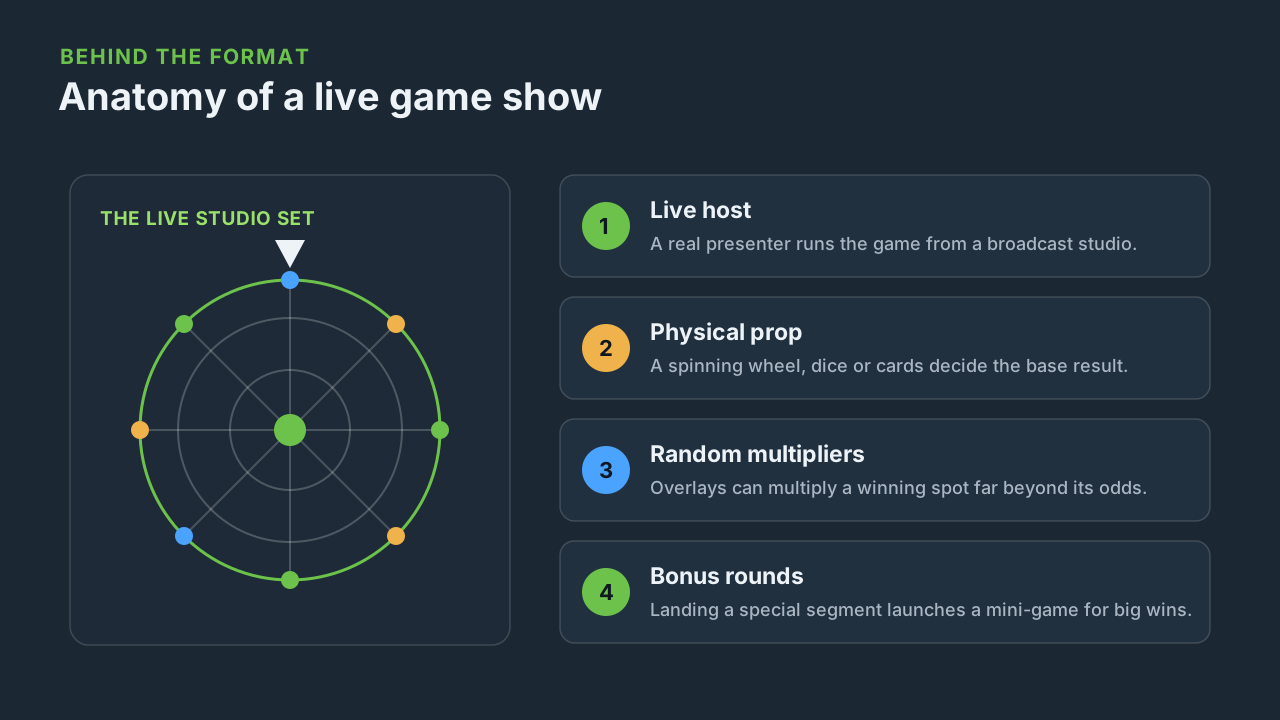
What makes it a show rather than a plain wheel is everything layered on top. The host keeps the energy up and interacts with players through an on-screen chat. Random multipliers can land on segments and inflate the payout well beyond the base odds. And certain segments do not pay directly at all; instead they open a bonus round, a self-contained mini-game where the headline prizes are won. To understand how the live stream and random elements are produced and certified, our guide to how online casinos work walks through the technology behind the lobby.
Why live game shows are booming
The rise of the format is not an accident. Game shows solve several problems for studios and operators at once, and they happen to suit the way people play today. Three factors stand out.
A format built for streaming
Game shows are television by design, and television travels well down a video stream. Bright sets, animated overlays and a charismatic host make for compelling viewing even when you are not betting, which keeps players at the table longer. Because the drama is visual rather than statistical, a newcomer can enjoy the spectacle immediately without learning any strategy.
Mobile-first and social
The category grew up alongside the smartphone, and it shows. The big wheels and bold graphics are designed to read clearly on a small screen, and the shared table, where hundreds of players bet on the same spin, turns a solitary game into a communal one. Live chat, leaderboards and a host who reads out names all lean into that social feel, which is rare in classic casino play.
A gateway beyond slots
For operators, game shows are a bridge. They pull in slot players who find traditional tables intimidating, and they give live casino a headline act that markets itself. A single hit format can define a studio's year and draw players across from rival sites, which is why the release calendar has become so crowded. The result is a steady stream of new games, each trying to out-produce the last.
Where game shows sit in the live-casino world
It helps to picture live casino as a spectrum rather than a single thing. At one end sit the classic tables, played much as they are in a bricks-and-mortar casino. At the other end sit the full game shows. In between is a growing middle ground of enhanced tables that borrow the game-show trick of adding random multipliers.
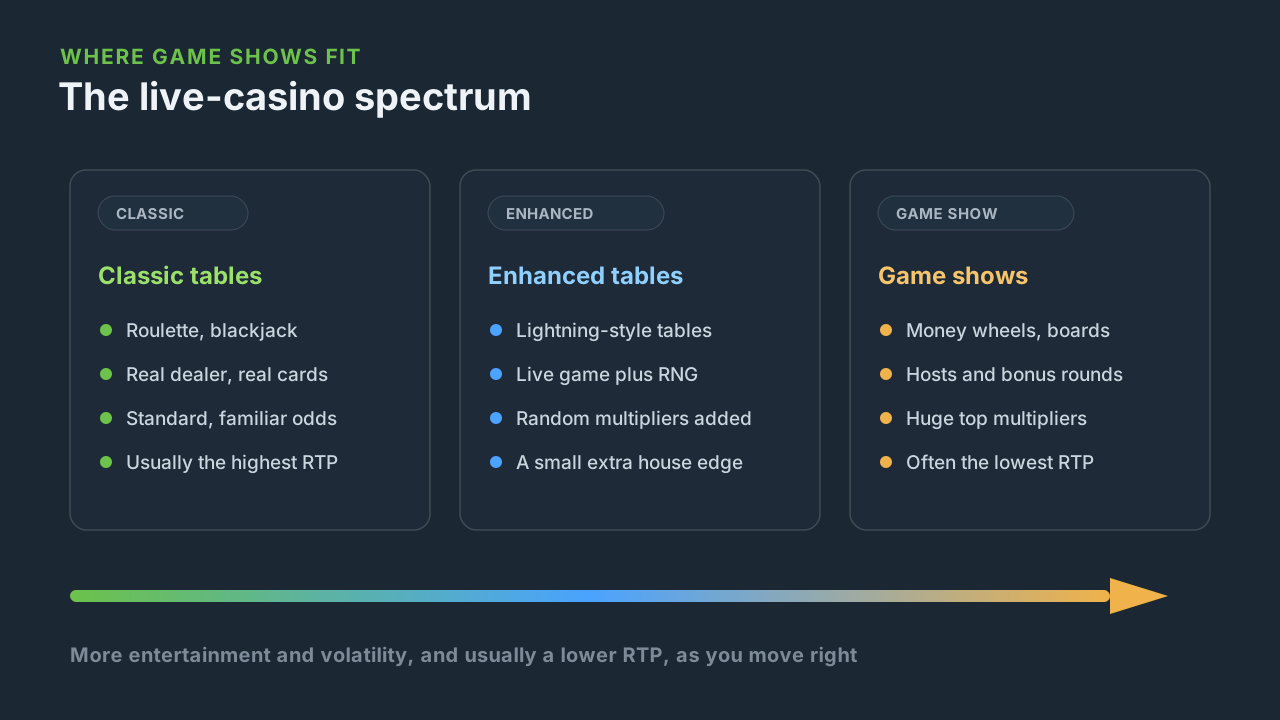
The pattern along that spectrum is consistent. Classic tables tend to offer the highest return to player and the calmest experience. Enhanced tables trade a small slice of that return for the thrill of occasional multipliers. Game shows push furthest into entertainment, with the lowest typical RTP and the highest volatility, meaning the wins are rarer but can be spectacular. Knowing where a game sits tells you a lot about how it will feel before you even place a bet, and our guide to RTP and volatility explains why those two numbers matter so much.
A short history of the format
The live game show is younger than it feels. Live-dealer casino itself only became smooth and reliable once home internet could carry a stable video stream, and for years that meant faithful digital versions of roulette, blackjack and baccarat. The breakthrough idea was to stop copying the casino floor and start borrowing from television instead.
The first true money-wheel show arrived late in the last decade and proved the concept almost overnight: players did not need to know any strategy, they just bet on where a big, colourful wheel would stop. Its success triggered a wave of imitators and, more importantly, a leap in ambition. Studios began licensing famous entertainment brands, bolting animated bonus rounds onto the wheel, and building dedicated sets that looked like prime-time game shows rather than casino tables.
By the early 2020s the category had its blockbusters, formats that combined a spinning wheel with several distinct bonus games and multipliers stacked on top. Those hits reset expectations for how elaborate a live game could be, and the release schedule has been crowded ever since. What started as a single clever twist on a wheel has become a permanent wing of the online casino, with its own stars, studios and fast-moving release calendar.
The formats you will meet
Beneath the branding, most game shows fall into a few recognisable families. The names change with every release, but the underlying mechanics repeat, so once you recognise the family you know roughly what to expect.
| Format family | How it plays | What defines it |
|---|---|---|
| Money wheel | Bet on the number or symbol the wheel stops on | Simple, fast, the original game-show template |
| Wheel plus multipliers | A money wheel with random multipliers added on top | Bigger swings, the bridge to full game shows |
| Board or adventure | A wheel triggers an animated bonus round or board game | Elaborate bonus rounds hold the largest wins |
| Dice and card shows | Physical dice or cards drive the result, not a wheel | A change of pace with the same show-style production |
The category was defined by a handful of breakout titles. Money-wheel games such as Dream Catcher proved the concept, Monopoly Live added an animated bonus round built around a familiar brand, and Crazy Time layered four separate bonus games onto a single wheel. Their success set the template that newer formats now build on and try to top, whether by adding fresh bonus rounds, faster rounds, or new physical props.
What unites the families is a deliberate rhythm. Long stretches of small, frequent wins keep the table lively, punctuated by the rare trigger of a bonus round where a big payout becomes possible. That rhythm is the engine of the format, and it is also the reason the maths behaves differently from a classic table.
How the maths works: RTP, multipliers and volatility
Game shows are casino games, so the house holds an edge, just as it does at roulette. What differs is how that edge is distributed and how the payouts are shaped. Understanding this is the single most useful thing a player can take away, because it explains why the games feel so exciting and yet cost more to play over time.
Why the RTP is often lower
Return to player, or RTP, is the share of all wagers a game pays back over the long run. Classic tables such as single-zero roulette or blackjack sit high, often around 97 to 99 percent. Many game shows sit noticeably lower, and the figure also depends on where you bet. Putting money on the plain base numbers usually returns more than betting on the flashy high-multiplier segments, which look tempting but carry a bigger built-in margin. If any of these terms are unfamiliar, our casino glossary defines them in plain English.
The role of multipliers
Multipliers are the heart of the format and the reason a modest bet can occasionally pay out enormously. When a random multiplier lands on a segment, it boosts that payout, sometimes many times over. This is thrilling, but it comes at a cost: the chance of a multiplier landing is already priced into the odds, so on average you pay for the excitement through a lower base return. The rare huge win is funded by the many spins that miss.
Side bets and the house edge
Most game shows tempt you with side bets on the bonus segments, and these are where the house edge is usually steepest. They pay rarely but spectacularly, and covering every possible outcome to avoid missing a bonus is a common trap, because the combined cost of those bets eats into returns fast. The disciplined approach is to pick your bets deliberately rather than blanketing the board, accepting that you will sometimes watch a bonus round you did not back.
What it means for players
For players, game shows are a genuinely new kind of fun, and there is nothing wrong with enjoying them for what they are. The key is to go in clear about the trade-offs, because the same features that make them exciting also make them cost more and swing harder than a classic table.
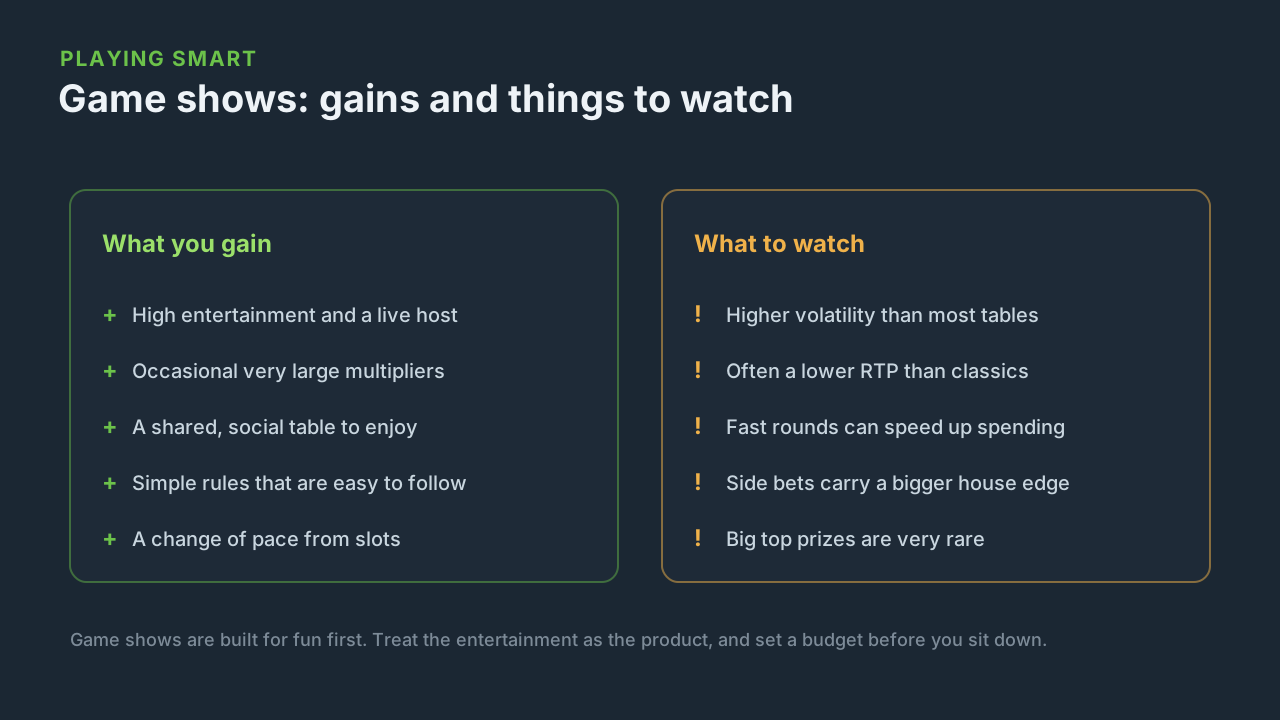
On the upside, you get high production values, a host, a social table and the real chance of an outsized multiplier win, all wrapped in rules simple enough to grasp in seconds. On the other side, the higher volatility means longer dry spells, the lower RTP means the entertainment costs a little more per hour than a classic table would, and the fast, moreish pace can quietly speed up how much you spend. None of that is a reason to avoid them, but it is a reason to treat them as an evening's entertainment rather than a way to chase profit.
What it means for operators and studios
From the industry's side, game shows have become strategic. They are expensive to build, requiring real studios, presenters and round-the-clock production, which rewards the largest studios and reinforces the concentration we covered in our report on how the market is consolidating. But a hit format pays for itself many times over by drawing players and defining a brand.
The two viewpoints, player and operator, line up neatly when placed side by side.
| Theme | For players | For operators |
|---|---|---|
| Appeal | Fun, social, easy to understand | A headline act that draws and keeps players |
| Cost | Lower RTP, so it costs more per hour | Expensive to produce, rewarding scale |
| Pace | Fast rounds that can speed spending | Higher engagement and time at the table |
| Risk | High volatility, rare big wins | Reliance on a few breakout hits |
How to choose a game show worth your time
With so many formats competing for attention, a little judgement helps you find the ones that suit you and avoid the ones that will simply drain a balance quickly. A few practical checks make the difference between an enjoyable session and a frustrating one.
Start with the numbers. Open the game's information panel and look for the stated RTP, remembering that many game shows quote a range because the return depends on which bets you place. Favour games and bets built around the base result rather than the extreme multiplier segments, since those base bets almost always return more over time. Next, watch a few rounds before betting, which most tables let you do for free; the pace, the frequency of bonus rounds and the size of typical wins tell you a lot about how the game will feel.
Finally, match the format to your mood and budget. A calm money wheel with modest swings suits a longer, low-stakes session, while an elaborate multi-bonus show is a high-volatility ride better kept short and small. Decide which experience you actually want before you sit down, and you will enjoy the show far more than if you drift into whichever table happens to be loudest.
Playing game shows responsibly
Because game shows are engineered to be entertaining and fast, a little discipline goes a long way. The single most useful habit is to decide before you sit down how much money and time the entertainment is worth, and to stop there regardless of how the session is going. Treat any winnings as a bonus, not a target.
The pace deserves special attention. Rounds come quickly, the shared table nudges you to keep betting so you do not miss a big spin, and the rare bonus round can tempt you into covering every outcome. Resisting that pull is where budgets are won or lost. Every licensed casino gives you deposit limits, loss limits and reality-check reminders, and setting them in advance takes the decision out of the heat of the moment. Our guide to responsible gambling and staying in control covers those tools in detail.
Keep the fun in perspective
Game shows are designed to feel like a night out, and that is the healthiest way to approach them. Set a budget you are comfortable losing, give yourself a time limit, and never bet to win back a loss. The big multipliers you see celebrated online are rare by design, and the safest mindset is to play for the show, not the jackpot.
What comes next
The format is still evolving quickly. Expect studios to keep experimenting with richer bonus rounds, augmented-reality overlays that blend animation with the live set, and new physical props beyond the wheel. Familiar entertainment brands will keep being licensed, because a recognisable name lowers the barrier for a curious newcomer, and cross-over formats that mix slots with live hosts are already appearing.
Two forces will shape how far it goes. Regulation is one, as some markets scrutinise fast, high-volatility products and the way they are marketed, which may temper the most aggressive designs. Player taste is the other, since novelty fades and only the formats that are genuinely fun to return to will survive the crowded release schedule. The likely path is not endless escalation but a settling into a few durable families, refreshed regularly, much as slots did before them.
The bottom line
Live game shows have earned their place in the lobby by doing something classic tables never tried to: turning a bet into a broadcast. They are social, spectacular and genuinely fun, and for many players they are the most enjoyable thing in the live casino. That appeal is real and worth celebrating.
The trade-off is equally real. You are paying for the entertainment through a lower return and a bumpier ride, so the format rewards a clear head and a set budget more than most. Enjoy the show, understand the maths, use the limits your casino provides, and game shows can be a highlight of your play rather than a drain on it. As with every casino game, the smartest players are the ones who treat the fun as the prize.
Frequently asked questions
What is a live casino game show?
A live game show is a casino game hosted by a real presenter in a broadcast studio, built around a physical prop such as a money wheel, with random multipliers and bonus rounds that make it feel like a TV show rather than a classic table.
Are live game shows fair?
At licensed casinos, yes. The wheels and props are physical and independently tested, and any random multipliers are certified. The result is not fixed, but the built-in house edge means the game favours the casino over time, like any casino game.
What is the RTP of live game shows?
It varies by game and by how you bet, but game shows often carry a lower RTP than classic tables such as blackjack or single-zero roulette. Betting only on the base numbers usually gives a better return than chasing the high-multiplier bonus spots.
What are the most popular live game show formats?
The best known are money-wheel games, board or adventure games with bonus rounds, and enhanced wheels that add multipliers. Titles such as Crazy Time, Monopoly Live and Dream Catcher helped define the category.
How do multipliers and bonus rounds work?
A base result comes from the wheel or prop, and random multipliers can boost a winning spot. Landing a special segment triggers a bonus round, a separate mini-game where most of the largest wins are decided.
Are game shows good for beginners?
The rules are simple and the host guides you, so they are easy to pick up. The trade-off is higher volatility and a lower RTP than classic tables, so treat them as entertainment and keep stakes small while you learn.
How can I play live game shows responsibly?
Set a budget and a time limit before you start, treat the entertainment as the product rather than the winnings, avoid chasing the rare big multipliers, and use the deposit and loss limits every licensed casino provides.
Go deeper

Game studios consolidate as libraries grow
Why the studios behind these formats keep merging, and what it means for the games you see.
Read article →
RTP and volatility explained
The two numbers that decide how a game pays, and why game shows swing so hard.
Read guide →
Operators lean into AI personalisation
How casinos decide which games and tables to put in front of you, and where the limits are.
Read article →Editorial note
This article is independent journalism about the online gambling industry. It is not sponsored by any studio or operator, and it names games only to illustrate how the formats work. Game rules, returns and availability vary by title and market and can change over time. Nothing here is betting advice. If you choose to play, do so only at licensed casinos and within limits you set in advance.