
Advertising Standards: What Changed for Casino Marketing



The gambling advert has become one of the most fought-over pieces of screen time in sport and media, and the rules governing it are being rewritten at speed. Where operators once blanketed shirts, stadiums, ad breaks and social feeds, a wave of new standards now dictates when they can appear, who they can reach, and what they are allowed to say.
This is not one rule in one country but a broad shift across many regulated markets, each pulling on the same set of levers. Some are capping the volume of ads around live sport, some are stripping gambling logos from football shirts, and some are moving toward near-total bans on advertising online. The common thread is a belief that gambling marketing had grown too loud, too constant and too easy for young people to see.
This article explains what has actually changed, how the rules break down across the main advertising channels, how timing restrictions such as watersheds work, and what it all means for players and the operators trying to reach them. It is a plain-English guide to a fast-moving picture, not legal advice.
The story in brief
- Rules are tightening on four fronts: broadcast, sponsorship, online and bonuses.
- Sport is a battleground, with shirt and venue sponsorship being phased out in several markets.
- Timing matters, as watersheds and whistle-to-whistle rules keep ads away from key moments.
- Online is the new frontier, with age-targeting and limits on affiliates and influencers.
- Bonuses are under pressure, from clearer terms in some markets to outright bans in others.
What is actually changing
For years, gambling advertising was governed mainly by voluntary codes and broad principles: be socially responsible, do not target children, show a safer-gambling message. Those principles still apply, but they are increasingly backed by hard, specific rules written into law or licensing conditions. The shift is from asking operators to behave well to telling them exactly what they may and may not do.
The change also spans more of the customer journey than before. Early rules focused on television, the most visible channel. Newer ones reach into sponsorship deals, search and social media, affiliate websites, influencer posts and the design of bonus offers. As operators moved their spending online to follow their audience, regulators followed too, and that is where much of the current action is concentrated.
How we got here
The current wave did not appear overnight. It is the product of several years of steadily firmer rules, each building on the last as evidence and public concern grew. Seeing the sequence helps explain why 2026 feels like a turning point.
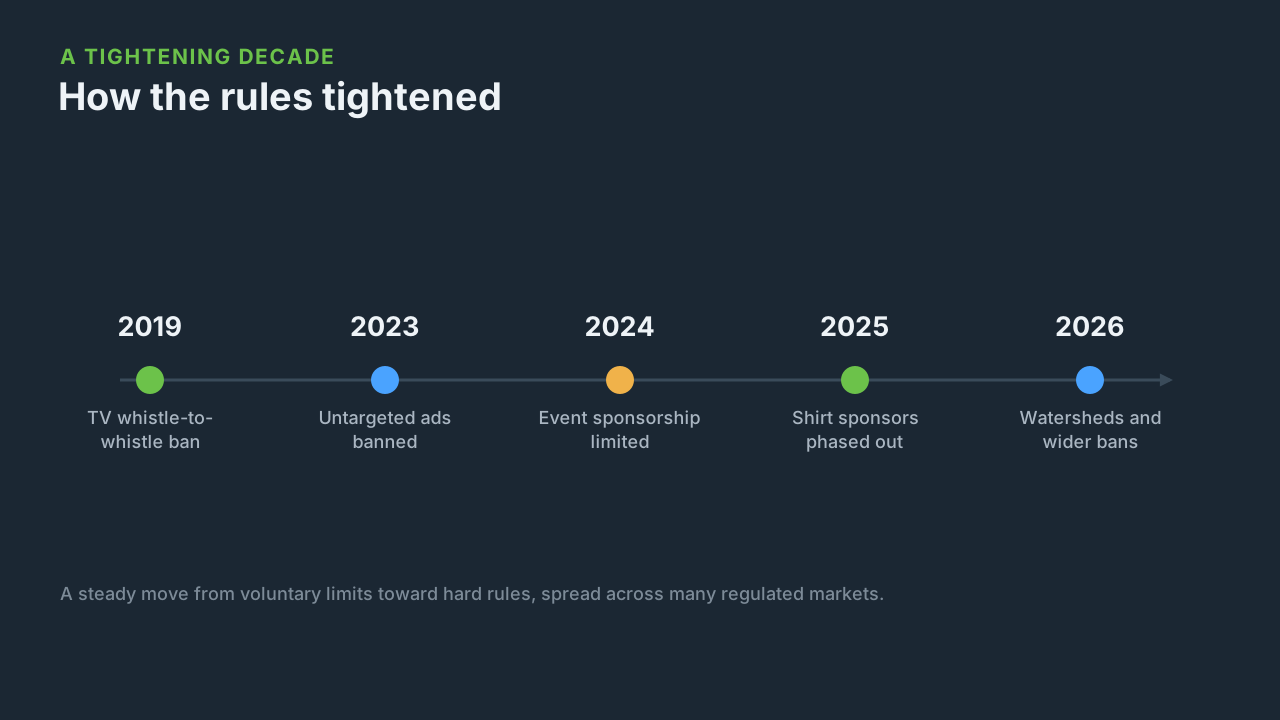
The early steps were largely voluntary and focused on broadcast, such as keeping betting ads out of the moments around live sport. Then came bans on untargeted advertising that could reach anyone, followed by limits on sponsoring events and, more recently, the phasing out of gambling logos on sports shirts. The latest moves, arriving through 2026, are the boldest yet: legal watersheds, tighter online rules and, in at least one market, a push toward a near-total ban on gambling advertising.
The main fronts
It helps to think of the rules as pressing on four fronts at once. An operator that shifts spending away from one, say television, quickly finds the others tightening too. That is deliberate, because regulators learned that squeezing a single channel simply pushed marketing budgets elsewhere.
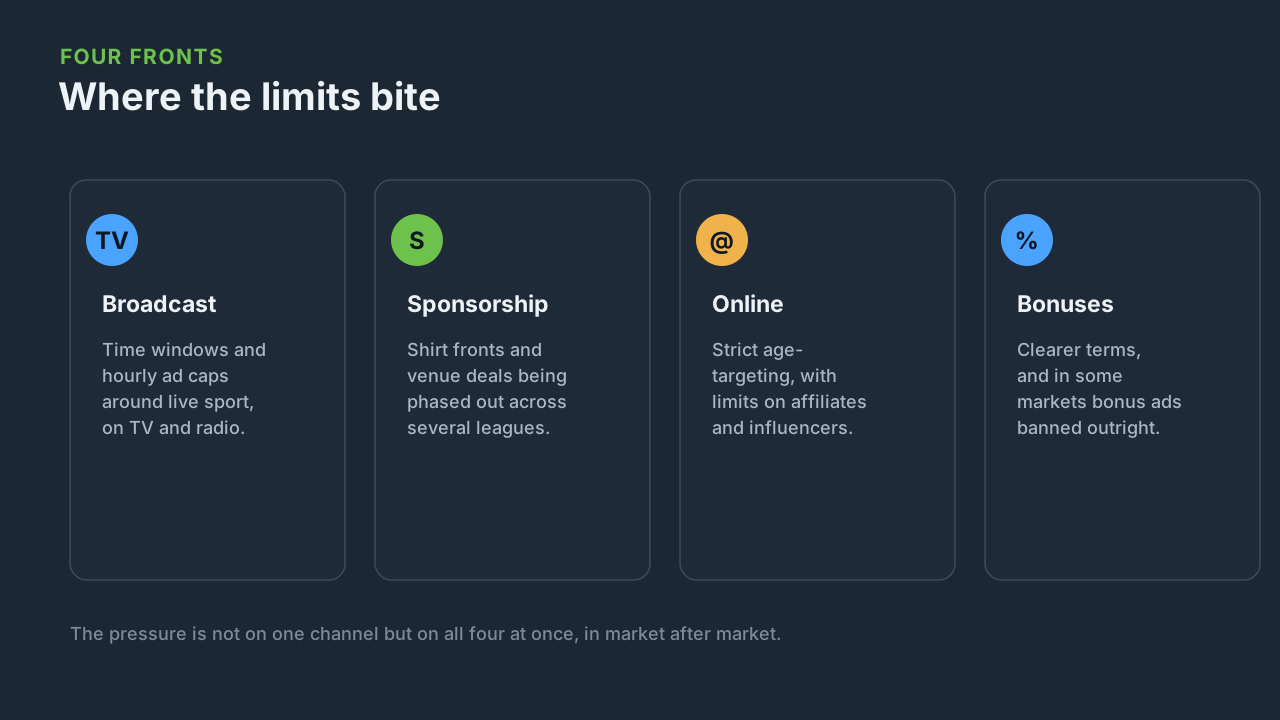
Broadcast and radio
Television and radio were the first targets and remain central. The tools here are mostly about timing and volume: keeping ads out of daytime hours when children may be watching, pausing them around live sport, and in some places capping how many can run in a single hour. Australia's proposals, for example, pair a ban on betting ads during live sport on free-to-air television with a strict cap on how many may run per hour in the restricted window.
Sport and sponsorship
Sponsorship is where the change is most visible to fans. The Premier League is removing gambling brands from the front of club shirts from the 2026/27 season, while the Netherlands has gone further and banned sports sponsorship altogether, ending shirt deals across its top division. Britain is also consulting on limiting sponsorship to licensed operators only. Some advertising on sleeves, training kit or pitchside boards survives for now, but the direction is clearly toward less.
Online and social
The online front is the newest and fastest-moving, because it is where operators spend most heavily and where young people spend most of their time. Rules here focus on strict age-targeting, so campaigns must be aimed only at adults, and on reining in affiliates and influencers. Finland's reformed regime, for instance, permits social media marketing only through an operator's own accounts and bars both affiliate marketing and influencer promotions.
Bonus advertising
Finally, the bonus offer itself is under scrutiny. Some markets, such as Sweden, now require that bonus terms be shown clearly and upfront rather than buried in fine print. Others go much further: Finland's new rules restrict player incentives to a narrow exception, and the Netherlands has proposed banning bonuses outright. If you want to understand the terms behind any offer you do see, our casino glossary explains the language in plain English.
The watershed and whistle-to-whistle
Two timing rules come up again and again, and they are worth understanding because they shape when you will and will not see gambling ads. Both are about protecting moments when audiences, and especially younger ones, are largest.
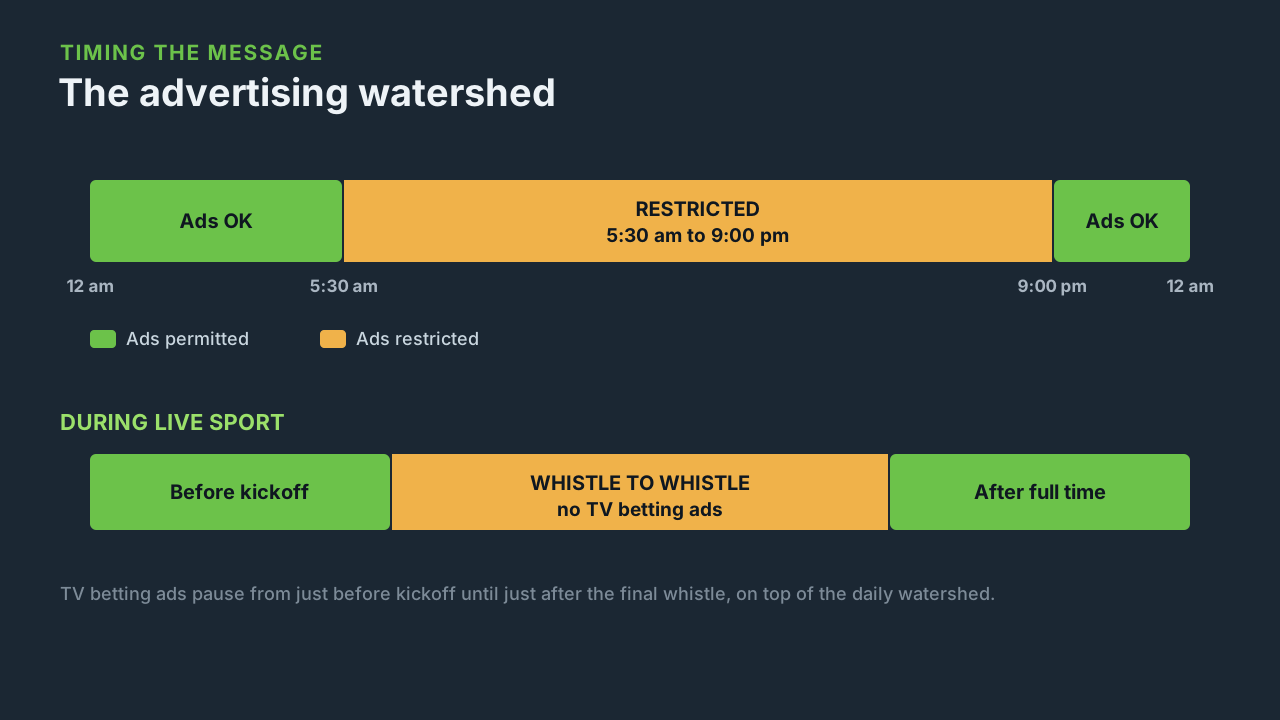
A watershed is a daily window during which gambling advertising is banned. Ireland's new law is a clear example, prohibiting this advertising between 5:30am and 9:00pm so that ads can only run late in the evening. Notably, that particular rule does not extend to social media or online video, which shows how timing limits and online limits are often handled separately. The whistle-to-whistle rule is narrower and sport-specific: agreed by the UK industry in 2019, it keeps TV betting ads off screen from five minutes before a live event starts until five minutes after it ends, though it does not touch pitchside boards or online feeds.
Market by market
No two markets have taken exactly the same path, but the family resemblance is strong. The table below captures the headline change in each of our markets, as a snapshot of a picture that is still moving.
| Market | Headline advertising change |
|---|---|
| United Kingdom | Front-of-shirt sponsorship ending, whistle-to-whistle stays, tighter online age-targeting |
| Ireland | New daily watershed banning ads between 5:30am and 9:00pm |
| Netherlands | Untargeted ads and sports sponsorship banned, near-total ban proposed |
| Sweden | Moderation standard, adult-only targeting, bonus terms shown clearly |
| Finland | Moderate marketing only, no affiliates or influencers, bonus limits |
| Australia | Proposed live-sport ad ban with hourly caps, no odds or celebrities |
Read together, the markets show a clear pecking order of concern: protect children first, then live sport, then the online spaces where targeting is sharpest. The same regulators are also tightening the rules on money itself, a trend we cover in our report on how markets are tightening affordability checks and deposit limits.
At a glance: what is allowed and what is not
Because the fine detail varies by market, it helps to step back and see the overall status of each common practice. The summary below reflects the general direction across our markets rather than any single country's rulebook.
| Practice | Where it stands now |
|---|---|
| Untargeted TV and radio ads | Banned or heavily limited in several markets |
| Ads around live sport | Paused or capped by time and by volume |
| Front-of-shirt sponsorship | Being phased out, ended in some markets |
| Affiliate and influencer promotion | Restricted, and banned outright in places |
| Bonus advertising | Terms must be clear, banned in some markets |
| Daytime advertising | Restricted by watersheds in a growing number of markets |
Why the rules are tightening
The reasons echo the wider push on gambling policy, but advertising carries a particular charge because it is so public. Three arguments come up repeatedly.
The first is protecting children and young people. Because ads on shirts, in stadiums and across social media are hard to shield young audiences from, regulators treat exposure as a harm in itself, regardless of whether a child can actually place a bet. The second is the sheer volume: research and press coverage have highlighted just how many gambling messages a viewer meets during a single televised match, feeding a sense that marketing had become saturating. The third is normalisation, the worry that constant, upbeat advertising makes gambling feel like an ordinary part of watching sport rather than a risky activity.
Underlying all three is the same evidence of gambling harm that drives the rest of safer-gambling policy. Advertising is seen as one of the levers most directly within a regulator's control, which is why it has moved so quickly.
What it means for players
For most players, the visible change is simple: fewer gambling ads, in fewer places, at fewer times. Match broadcasts feel less saturated, shirts carry different sponsors, and the offers that do appear tend to spell out their terms more clearly. None of this stops anyone who wants to gamble from doing so; it changes the backdrop rather than the activity.
There are quieter effects too. Clearer bonus rules make it easier to judge whether an offer is actually worth taking, and adult-only targeting means fewer ads following you around online if you are not the intended audience. The trade-off some point to is that less advertising can make it harder to tell a licensed, regulated operator from an unlicensed one, which is why knowing how to check a licence still matters. Our guide to casino licensing and safety explains exactly what to look for.
What it means for operators and affiliates
On the industry side, the changes are forcing a rethink of how players are reached at all. Sponsorship budgets that once flowed to shirt deals are moving toward sleeves, venues or other sports, and toward content and loyalty rather than mass-market ads. Compliance teams have grown, because a single non-compliant post or affiliate page can now trigger enforcement, and rules increasingly follow the operator even when the marketing is produced abroad.
Affiliates and influencers feel it most sharply. Markets that bar affiliate marketing or restrict social promotion to an operator's own channels cut off routes that were central to how many sites acquired customers. The likely result is fewer, larger and more carefully vetted partnerships, and a greater emphasis on being genuinely useful, through honest reviews and safer-gambling information, rather than simply loud. That shift is part of why responsible messaging, of the kind set out in our guide to responsible gambling and staying in control, has moved to the centre of compliant marketing.
The knock-on effect for sport and media
Gambling money has become woven into the finances of sport and media, which is why advertising rules ripple far beyond the operators themselves. Football clubs, in particular, came to rely on betting sponsors for shirt fronts and stadium deals, and broadcasters built a share of their commercial airtime around gambling ads during live events. When the rules change, that money has to be replaced or lost.
The effect is uneven. Big clubs and top leagues tend to find new sponsors relatively quickly, because their audiences are valuable to many industries. Smaller clubs and lower divisions, which had fewer options to begin with, feel the loss of gambling revenue more sharply, and some argue this is an overlooked cost of the reforms. Supporters of the rules counter that any short-term funding gap is worth it to reduce children's exposure, and that other sponsors have historically stepped in once gambling brands step back.
For media, the pressure is nudging the industry toward different commercial models, from broader sponsor categories to more subscription and content-led revenue. None of this is catastrophic, but it is a real adjustment, and it explains why sport and broadcasting bodies are such active voices in the debate over how far the rules should go.
The debate
As with affordability rules, there is a genuine argument here worth presenting fairly. Supporters of tighter advertising standards say they protect children, reduce the normalisation of gambling, and curb the saturation that made watching sport feel like an extended betting advert. They point to public opinion, which tends to favour stronger limits, and argue that a activity carrying real risk should not be marketed as casually as a soft drink.
Critics raise several counterpoints. They warn that heavy restrictions can starve sports and media of legitimate funding, that a well-run licensed operator loses the ability to distinguish itself from unlicensed rivals, and that pushing marketing out of regulated view can hand attention to offshore sites that follow no rules at all. Some also question how much advertising actually drives harm, arguing that the heaviest losses come from a small group whose behaviour ads do not create. The honest conclusion is that the balance is contested, and that regulators are weighing protection against these real trade-offs rather than acting on settled proof.
What comes next
Expect the online front to keep tightening, since that is where spending and young audiences have concentrated, and where current rules still have the most gaps. Watch too for more markets to test whether near-total bans, of the kind proposed in the Netherlands, actually reduce harm or simply move advertising into channels that are harder to police. Sport will remain the flashpoint, with sponsorship deals likely to keep shrinking even where outright bans do not pass.
The open question is the same one that hangs over all gambling policy: where the line sits between meaningful protection and rules that push activity toward the unlicensed market. The markets that answer it convincingly, cutting genuine harm without driving players offshore, will set the template that others copy.
How to read the ads that remain
Even as the volume falls, you will still see gambling advertising, so it is worth knowing how to read it. A compliant ad from a licensed operator should name the brand clearly, carry a safer-gambling message, and avoid promising easy or guaranteed wins. Anything that leans on urgency, celebrity glamour or the idea that betting is a smart way to make money is either breaking the rules or coming from a site that ignores them.
Treat the offer in an ad as a headline, not the full story. The real detail lives in the terms, so judge a bonus by its wagering requirement and conditions rather than the big number on the banner. Be especially wary of ads that appear where they should not, such as untargeted promotions in markets that have banned them, because that is often a sign of an unlicensed operator. When in doubt, ignore the ad entirely and go directly to a site you have checked yourself, rather than following a link you were served.
The bottom line
Casino advertising is being reshaped in real time, and the direction is unmistakable: fewer ads, in fewer places, aimed more narrowly at adults, with bonuses and sponsorship under particular pressure. For players, the everyday effect is a quieter backdrop and clearer offers, rather than any change to the games themselves.
The smartest way to read the shift is not as a verdict for or against gambling, but as regulators trying to lower the volume of an activity they have decided was being marketed too freely. Whether they have struck the right balance will be judged over the coming years. In the meantime, the same advice serves players well: choose licensed operators, judge any offer on its written terms rather than its advertising, and treat gambling as entertainment you can afford.
Frequently asked questions
What changed in gambling advertising rules?
Rules are tightening across many markets at once, covering when ads can run on TV, sponsorship of sport, targeting online and on social media, and how bonuses are promoted. The direction is a move from voluntary industry codes toward hard legal limits.
Are gambling ads banned now?
Not everywhere, but restrictions are growing quickly. The Netherlands is moving toward a near-total ban on online gambling ads, while most other markets limit the timing, content, sponsorship and bonuses rather than banning advertising outright.
What is the advertising watershed?
A watershed is a daily time window in which gambling ads are not allowed. Ireland, for example, bars this advertising between 5:30am and 9:00pm, so ads may only appear late in the evening, though its rule does not cover social media or online video.
What is the whistle-to-whistle ban?
It is a UK rule, agreed by the industry in 2019, that keeps TV betting ads off air from five minutes before a live sporting event begins until five minutes after it ends. It does not cover pitchside boards or online channels.
Can casinos still sponsor sports teams?
Less and less. The Premier League is ending front-of-shirt gambling sponsorship from the 2026/27 season, and the Netherlands has banned sports sponsorship outright. Some sleeve, venue or perimeter advertising may remain for now in certain markets.
Can gambling bonuses still be advertised?
It depends on the market. Sweden requires bonus terms to be shown clearly and upfront, while Finland's reformed rules and proposals in the Netherlands restrict or ban bonus offers and their advertising altogether.
Why are advertising rules getting stricter?
Concern about gambling harm, a strong focus on protecting young people, and steady public and political pressure have pushed regulators to tighten how, when and where gambling can be advertised.
Go deeper

Markets tighten affordability and deposit limits
The other half of the safer-gambling push: checks on what players can afford, and caps on deposits.
Read article →
Casino licensing and safety
With fewer ads to go on, knowing how to check a licence matters more than ever.
Read guide →
Responsible gambling and staying in control
The tools and habits that keep gambling safe, whatever the marketing around it.
Read guide →Editorial note
This article is independent journalism about gambling regulation. It summarises fast-changing advertising rules in plain English and is not legal or compliance advice. Specific dates, thresholds and requirements vary by market and are reviewed regularly, so always check the current position with the relevant national regulator. If you choose to play, do so only at licensed casinos and within limits you set in advance.